

oyster bed
 1
3.7
1
3.7

- noun
- /ˈɔɪstər bɛd/
- Specialized
- In the shallow waters, the oyster beds provide an ideal environment for the oysters to thrive.
- oyster beds in the bay
Examples
-
I hear they're hiring over at the oyster beds.
-
In Puget Sound, the oyster beds are in relatively small shoreline areas; most of the sound is extremely deep.
Academic text (1996) -
For the first time in my life, I was seeing oyster beds.
Academic text (1994) -
Some channel dredging in the western end of the bay, however, eliminated good oyster beds.
Academic text (1990) -
The oyster beds are in the mouths of the rivers and are well protected from storms.
Academic text (1996) -
The change in salinity was enough to wipe out major oyster beds in bays on both sides of the river.
Blog text (14) -
As a result, New Jersey's oyster beds did not produce any oysters in 1993 and 1994.
Academic text (1996) -
The few remnants of Olympia oyster beds in the US Pacific Northwest are still generally open for harvest.
Academic text (2011) -
The dispute in Martin v. Waddell focused on the right to cultivate oyster beds in mudflats.
Academic text (2001) -
The company obtains the shells from abandoned oyster beds throughout the Connecticut oystering area, from Norwalk to New Haven, with suction dredges.
Academic text (1996)
Synonyms

An area where people grow oysters to sell
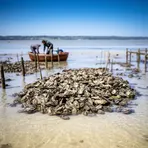
A shallow area of water where oysters grow
Surface Forms
Morphology
The meaning 'an area where oysters are bred and grown' is directly and compositionally derived from 'oyster' (the animal) + 'bed' (a place or layer where something lives or is cultivated). This noun+noun formation (like 'flower bed' or 'river bed') is cross‑linguistically common, so a B1 learner who knows both constituents would readily infer the meaning.
Etymology
Oyster bed comes from the picture of a garden bed, but in water: people put groups of oysters on the sea floor or in shallow water like plants in a bed so they can grow. So, oyster bed means the 'area' where oysters are grown and harvested.