
ovo-lacto vegetarianism
- noun
- /ˌoʊvoʊˈlæktoʊ ˌvɛdʒəˈtɛrɪənɪzəm/
- Many people choose ovo-lacto vegetarianism because it allows them to enjoy dairy products and eggs while avoiding meat.
Examples
-
The diet is often related to most ovo-lacto vegetarianism, which experts claim facilitates eggs and consequently milk; however, food.
Blog text (26) -
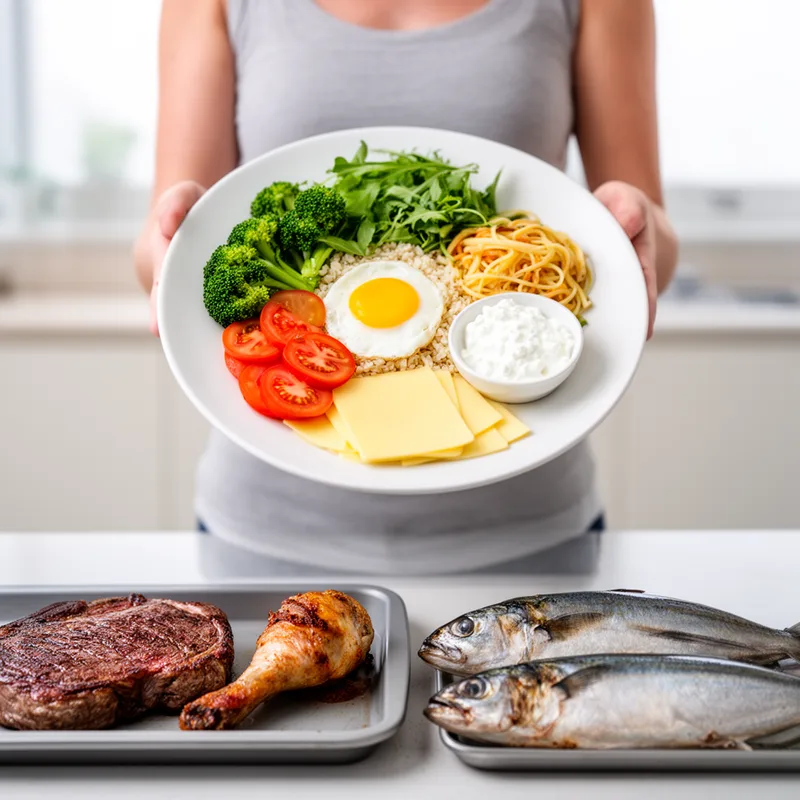
In ovo-lacto vegetarianism, individuals consume meals that include cheese and eggs, while completely omitting meat and fish.
-
Adopting ovo-lacto vegetarianism can lead to a healthier lifestyle by incorporating various nutrients from dairy and eggs.
Synonyms

 8
3.4
8
3.4

The practice of not eating meat or fish

A diet that includes eggs and dairy but does not include meat, fish, or poultry
Antonyms


Surface Forms
Morphology
ovo-lacto + vegetarianism
The overall meaning is compositionally built from 'vegetarianism' (abstaining from meat) plus the bound combining form 'ovo‑lacto' meaning eggs (ovo-) and milk/dairy (lacto-). However, 'ovo‑lacto' is a specialized, Latin-derived bound form rather than two independent everyday words, so while the sense is logically derivable for learners who recognize those morphemes, it is not fully transparent to a typical B1 learner without that morphological knowledge.
Etymology
Ovo-lacto vegetarianism comes from two parts: ovo meaning 'egg' and lacto meaning 'milk', so it names a vegetarian diet that includes eggs and dairy but not meat, fish, or poultry.