
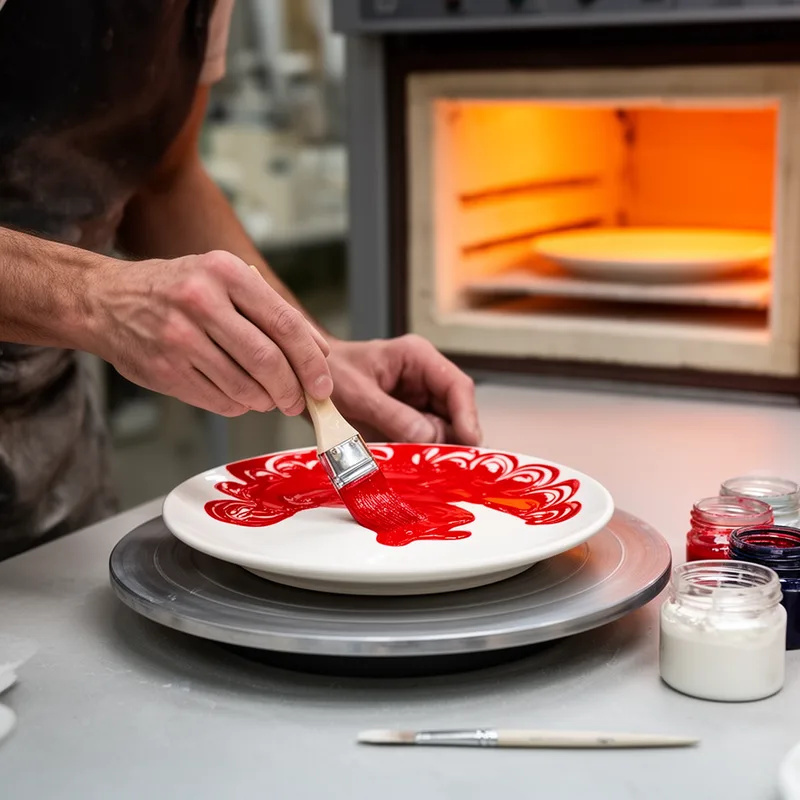
to overglaze
- verb
- /ˈoʊvərˌɡleɪz/
- Specialized
- After applying the base glaze, he carefully overglazed the intricate patterns to make them stand out.
Examples
-
The artist learned to overglaze the ceramic plates to enhance their colors before the final firing.
-
To add more detail to the vase, she decided to overglaze some areas with a glossy finish.
-
Her eyes, as Mark Crispin Miller describes them, "are overglazed by the wide, bright lenses of her spectacles, across which a dense and luminous reflection of the passing landscape streams like water," a visual metaphor for her "clouded vision."
Academic text (1999)
Synonyms
 3
6.5
3
6.5

To cover a surface with a hard shiny layer for protection or decoration


 1
6.2
1
6.2
To paint over an existing layer to cover or change it

To put a new shiny layer on a bowl or bathtub to make it look new
How Decorative

Surface Forms
Morphology
Etymology
Overglaze comes from over meaning 'on top' and glaze meaning 'the shiny layer on pottery', so to overglaze something is to add a new color or enamel 'on top' of the glaze to decorate it and fix the design.