
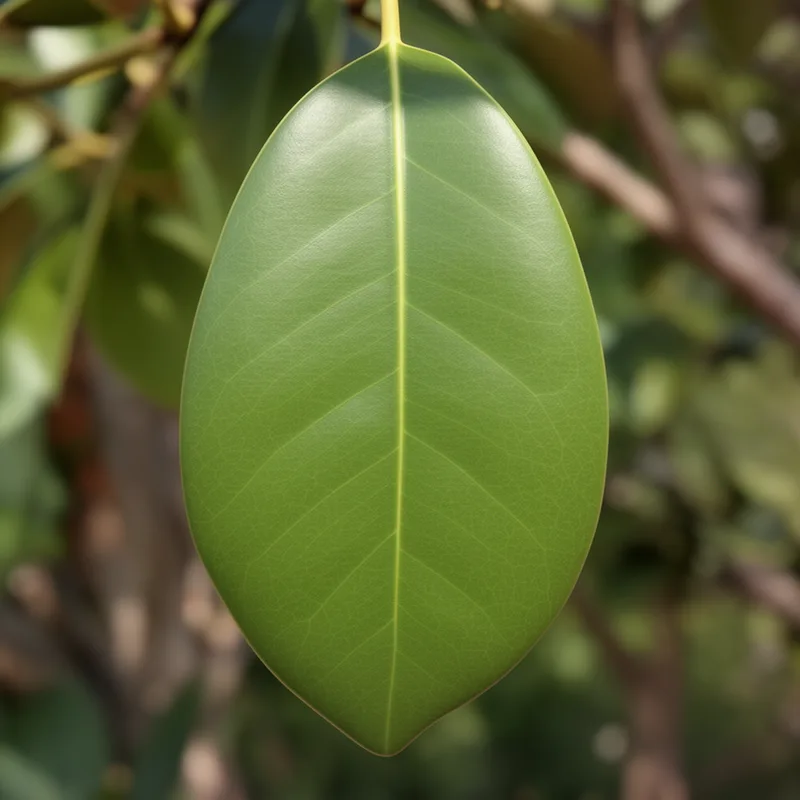
ovate leaf
- noun
- /ˈoʊveɪt liːf/
- Specialized
- The ovate leaf is green.
Examples
-
In botany class, we learned how to distinguish an ovate leaf from a lanceolate one.
-
The magnolia tree is known for its large, leathery, ovate leaves.
-
Many shrubs in the garden have ovate leaves that help them capture sunlight efficiently.
-
Look at this ovate leaf!
-
The plant features beautiful, green, ovate leaves that catch the sunlight beautifully.
-
In the garden, I noticed several shrubs with broad, glossy ovate leaves that added a lush appearance.
-
The botanist identified the specimen by its distinctively ovate leaves, which are shaped like eggs.
How Elongated
- Specialized

- Specialized
- Specialized
- Specialized
Surface Forms
Morphology
The meaning 'a leaf shaped like an egg, broader at the base' is directly and compositionally derived from 'ovate' (egg- or oval-shaped) + 'leaf' (plant organ). This simple adjective+noun descriptive pattern is common and cross-linguistically transparent, so a B1 learner who knows both constituent words will readily understand the MWE.
Etymology
Ovate leaf The name ovate leaf comes from the word for 'egg' because an ovate leaf looks like an egg, wider at the base and narrower at the tip. So, ovate leaf means a leaf that is 'egg-shaped' with the broader end at the base.

