
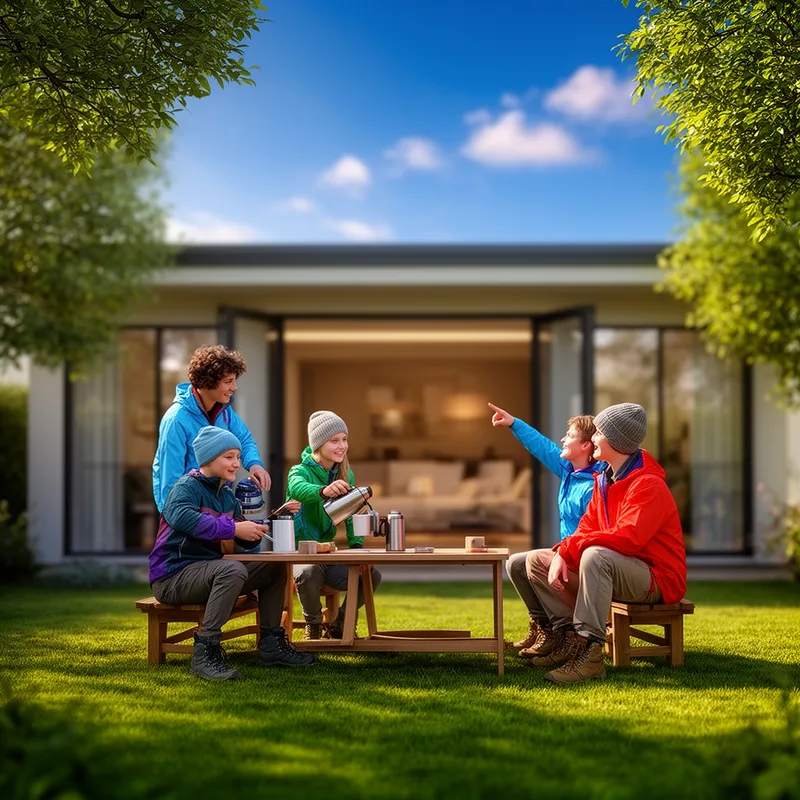
out-of-door
6.2
Happening outside in the open air rather than inside
- adjective
- /ˈaʊt əv ˈdɔr/
- Archaic
:
al aire libre
- The festival was held out-of-door, allowing guests to enjoy the fresh air.
Examples
-
Not the fake silence you get when you plug your ears so you hear nothing but your heart, but real out-of-doors silence.
Fiction book (1999) -
It probably came from the out-of-doors.
-
She enjoys reading out-of-door in her garden during the summer.
-
He prefers to exercise out-of-door instead of in a gym.
Synonyms

outdoor
vsout-of-door
 192
1.0
192
1.0

Used or done outside rather than inside a building
focuses on suitability and place rather than activity orientation

open-air
vsout-of-door
11
2.1
Taking place outside and not under a roof
stresses suitability and location rather than absence of cover

outside
vsout-of-door
11
1.0
Made for or used in the open air
is about being suitable for or happening in the open air not only location

exterior
vsout-of-door
4
3.4
For use on the outside of a building
applies more to general suitability in the open air rather than to building surfaces
Antonyms



How Outside

Surface Forms
out-of-door positive
out-of-doors positive
Morphology
Etymology
Out-of-door is like the modern word outdoor, made from out- ('out' or 'outside') and door ('entrance'), so imagine stepping 'out of the door' into fresh air. So, out-of-door means 'in the open air' or good for being outside.