
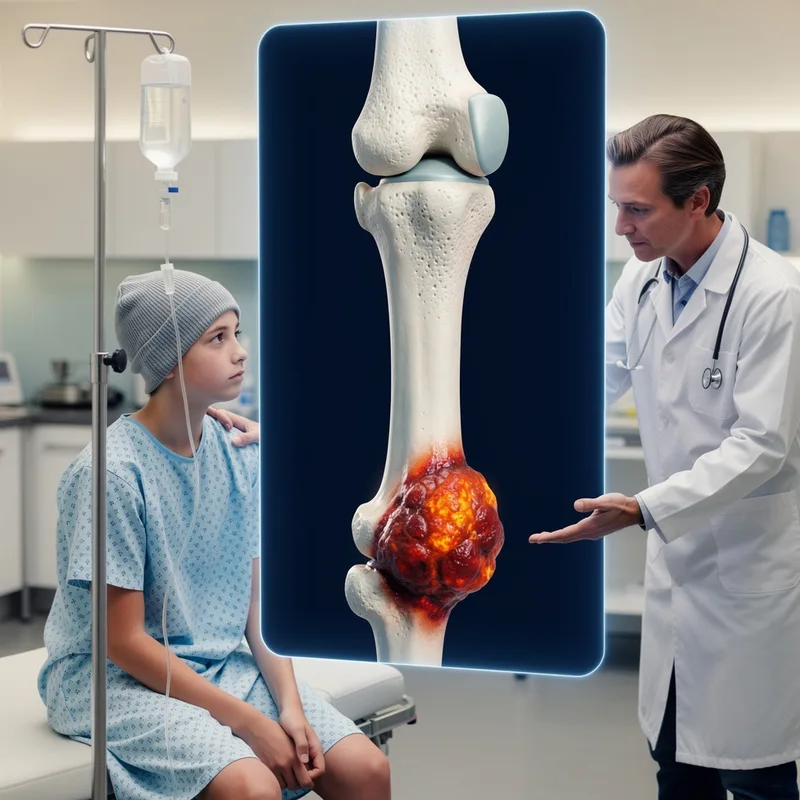
osteosarcoma
 3
9.9
3
9.9

- noun
- /ˌɑːstiəʊsɑːrˈkoʊmə/
- Specialized
- Osteosarcoma is treated with a combined modality therapy that includes surgery and chemotherapy.
Examples
-
The study results demonstrated that TIL therapy could be a very efficient strategy for the treatment of adult osteosarcoma.
Academic text (2006) -
A retrospective chart review identified patients in the study hospital who had localized osteosarcoma of an extremity between 1993 and 2003.
Academic text (2006) -
I'm 18 years old... and I had a touch of osteosarcoma about a year-and-a-half ago.
-
A biopsy is then performed to confirm the diagnosis of osteosarcoma.
Academic text (2006) -
Osteosarcoma is the most common primary malignant bone tumor in children and adolescents.
Academic text (2006) -
The 3-year disease-free survival in localized osteosarcoma is in the range of 60-70%.
Academic text (2006) -
Osteosarcoma is the most common type of osteosarcoma among children, according to Dana-Farber/Boston Children's.
-
About 600 new cases of osteosarcoma are diagnosed annually in the United States.
-
After a series of X-rays and additional tests, doctors diagnosed Kessler with osteosarcoma.
Synonyms
A type of bone cancer that often affects the thigh bone in children and young adults
How Dangerous
- Specialized
3
9.9

- Specialized
3
3.4
Surface Forms
Morphology
Etymology
Osteosarcoma comes from Greek parts: osteo- meaning 'bone' and -sarcoma (with -oma meaning 'tumor') from a word for 'flesh'. So it means a 'tumor of the bone', which explains why this word names a cancer that grows in bone.