
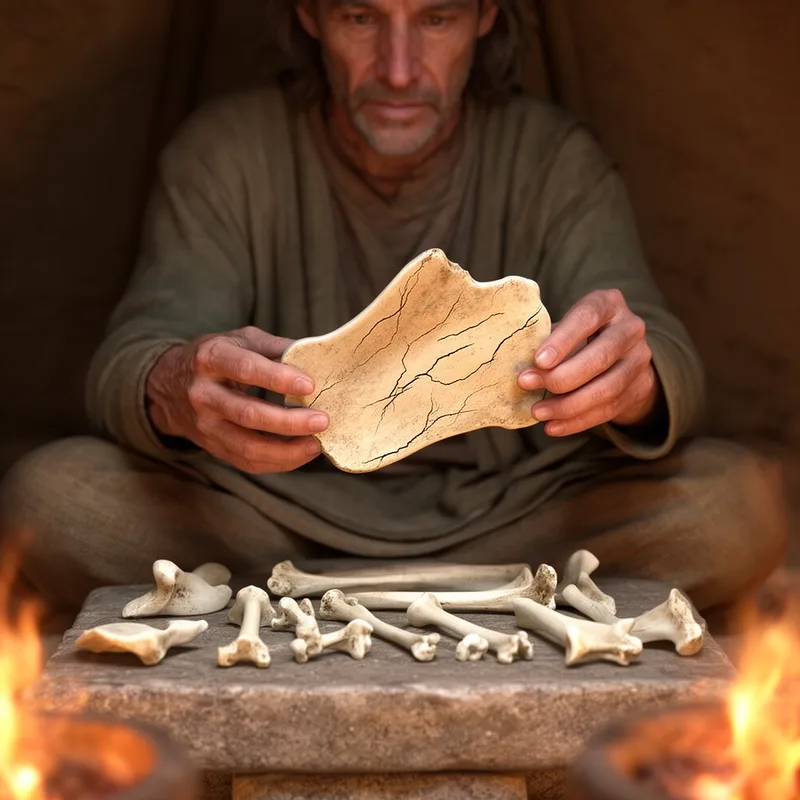
osteomancy


 1
9.9
- noun
- /ˌɑːstiˈoʊmænsi/
- Literature
- During the ceremony, the priest used osteomancy to predict the future by analyzing the bones.
Examples
-
The ancient practice of osteomancy involves interpreting the shapes of bones for divination.
-
Many cultures have their own forms of osteomancy.
-
In some ancient societies, priests performed osteomancy to guide important decisions.
-
The ritual of osteomancy involved carefully examining the cracks in animal bones.
-
Historians have found evidence of osteomancy in archaeological sites across Asia.
-
The ancient Greeks practiced osteomancy to predict the future.
-
Many cultures believe that osteomancy can reveal important messages about one's destiny.
Synonyms
 7
9.9
The act of trying to find the future using magic or signs
Surface Forms
Morphology
osteomancy = osteo- + -mancy (opaque) = osteo + mancy
The parts are Greek combining forms that are not productive standalone English words for most learners, so the meaning cannot be derived from familiar English base words.
Etymology
Osteomancy is built from osteo- 'bone' and -mancy 'divination' or 'fortune-telling'. So, osteomancy means reading bones to tell the future, by looking at their shapes or cracks for signs.