
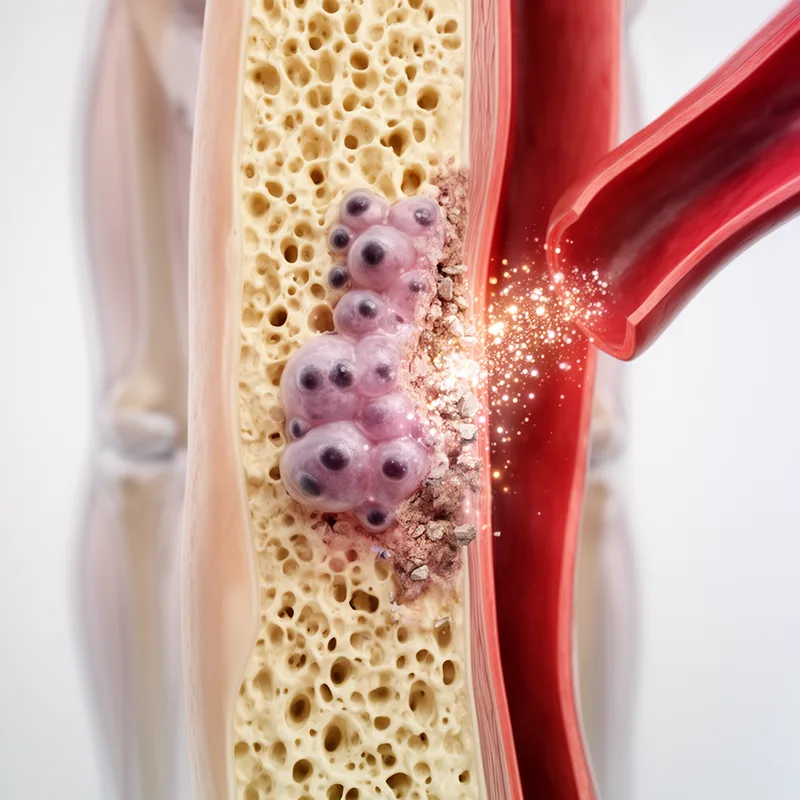
osteoclastic
- adjective
- /ˌɑːstiəˈklæstɪk/
- Specialized
- Bisphosphonates inhibit osteoclastic action, thereby increasing bone density (Rauch & Glorieux 2004).
- osteoclastic resorption
- osteoclastic activity
Examples
-
They have a direct action on the function of osteoclasts by inhibiting osteoclastic action (Fleisch, 2000).
Academic text (2005) -
Remodeling of bone is a process requiring both osteoblastic and osteoclastic equilibrium.
Academic text (2003) -
All drugs modify osteoclastic function.
Academic text (2007) -
It helps control the balance of osteoclastic stimulators (RANK ligand receptor-activated nuclear kinase protein or ligand) and inhibitors (osteoprotegerin).
Academic text (2007) -
The patient's treatment aimed to reduce osteoclastic activity to prevent further bone loss.
-
High levels of certain hormones can lead to increased osteoclastic resorption of bone tissue.
-
In osteoporosis, the balance between osteoblastic and osteoclastic functions is often disrupted, leading to weakened bones.
Synonyms
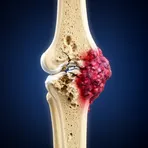
Makes bone break down and become weak
How Resorptive

Surface Forms
Morphology
osteoclastic = osteoclast (transparent) = osteoclast + ic
The adjective is directly formed from the noun 'osteoclast' with the productive adjectival suffix '-ic', yielding 'relating to osteoclasts'.
Etymology
Osteoclastic comes from osteo- meaning 'bone' (as in osteoporosis) and -clastic meaning 'breaking' or 'breaking down' (think iconoclast, a 'breaker' of images), so it describes cells or processes that 'break down' bone.

