
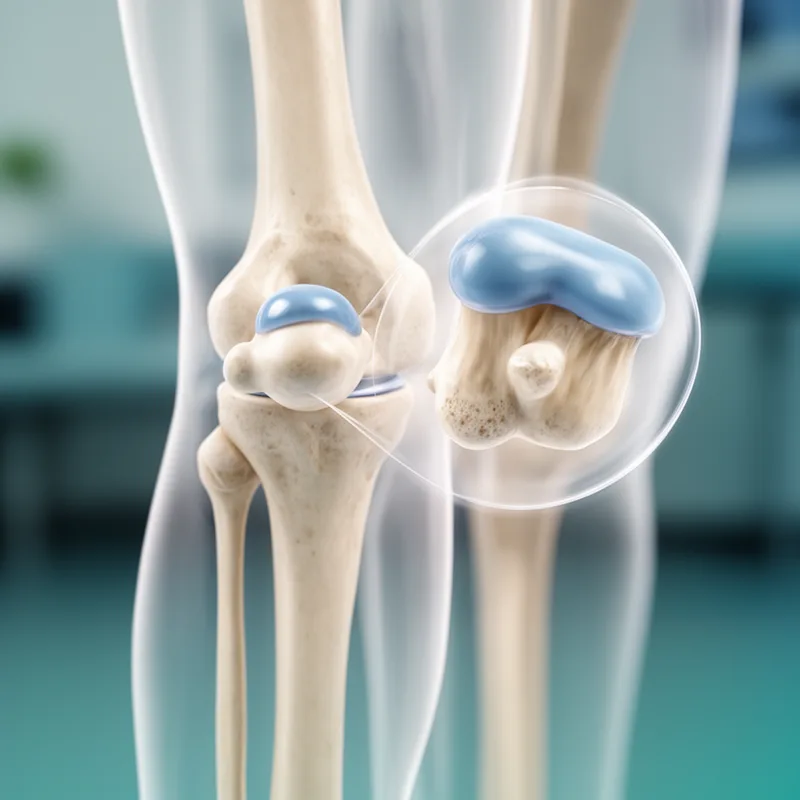
osteochondroma


 1
9.9
- noun
- /ˌɑːstɪoʊˈkɒndrəmə/
- Specialized
- After examining the X-ray, the specialist identified a osteochondroma on the patient's femur.
Examples
-
The radiologic differential diagnosis included pigmented villonodular synovitis, synovial sarcoma, chondroma, osteochondroma, or a parotid lesion.
Academic text (2003) -
Although distal median nerve compression is the most common site of FLH, proximal median nerve compression of the forearm due to coexisting osteochondroma has also been reported (44).
Academic text (2015) -
The doctor explained that the osteochondroma was benign and would not spread to other parts of the body.
-
She was relieved to learn that the tumor was an osteochondroma and did not require immediate surgery.
Synonyms

A hard, harmless growth on a bone that sticks out
Surface Forms
Morphology
osteochondroma = chondroma (opaque) = osteo + chondro + oma
The term is built from specialized Greek combining forms ('osteo-' + 'chondro-' + '-oma') that are medical morphemes unfamiliar to average learners, so the formation is not transparently interpretable by a B1 learner.
Etymology
Osteochondroma comes from Greek roots: osteo- 'bone', chondro- 'cartilage', and -oma 'tumor'. So an osteochondroma is a growth made of both bone and cartilage that is usually not cancer and often forms near the end of a long bone.