
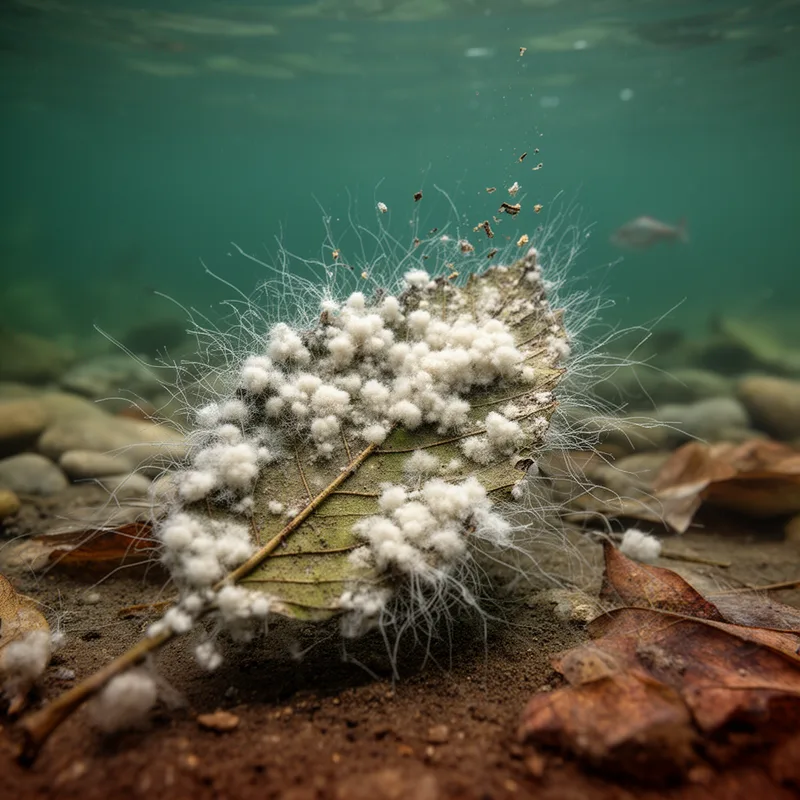
order Saprolegniales
- noun
- Specialized
- The order Saprolegniales includes water molds that can become pathogenic to fish in aquaculture systems.
Examples
-
Many species in the order Saprolegniales play a crucial role in the decomposition of organic matter in freshwater habitats.
-
Research on the order Saprolegniales has provided insights into fungal adaptations to aquatic environments.
-
The order Saprolegniales includes various aquatic fungi.
-
Many researchers study the order Saprolegniales for its ecological impact.
-
Many species in the order Saprolegniales play a crucial role in the decomposition of organic matter in freshwater habitats.
-
Research on the order Saprolegniales has provided insights into fungal adaptations to aquatic environments.
-
The order Saprolegniales includes water molds that can become pathogenic to fish in aquaculture systems.
Synonyms
A group of water molds made of thin threads that grow in fresh water
Surface Forms
Morphology
This is a straightforward taxonomic noun phrase combining the rank 'order' with the taxon name 'Saprolegniales', so the meaning ('an order of aquatic fungi') is directly derivable from the constituents. The pattern 'order + [taxon name]' is a common, compositional scientific construction and would be understandable to a B1 learner who knows the two words (even if the scientific name is technical).
Etymology
Order Saprolegniales comes from the old Greek root sapro- meaning 'rotten', because these fungi often grow on dead plants and animals in water. That's why the name fits: this order is a group of water molds that feed on decay in freshwater.

