
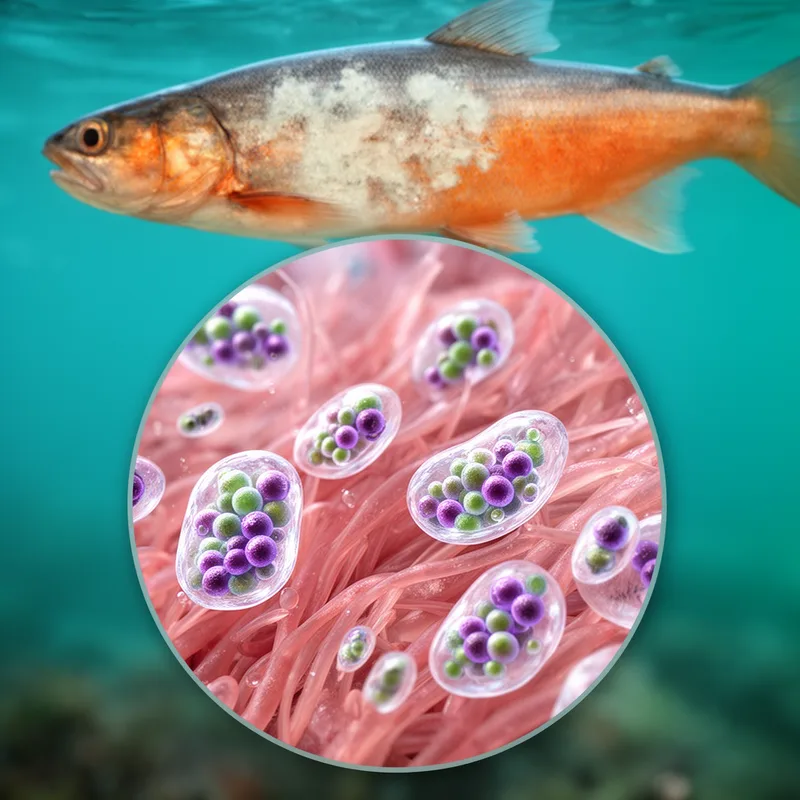
order Myxosporidia
- noun
- /ˈɔrdər mɪksoʊˈspɔrɪdiə/
- Specialized
- Several fish diseases are caused by parasites of the order Myxosporidia.
Examples
-
Researchers discovered a new species belonging to the order Myxosporidia in European rivers.
-
The complex life cycle of the order Myxosporidia has challenged scientists for decades.
-
The order Myxosporidia includes various parasitic species.
-
Researchers are studying the order Myxosporidia for its unique reproductive methods.
-
Researchers discovered a new species belonging to the order Myxosporidia in European rivers.
-
Several fish diseases are caused by parasites of the order Myxosporidia.
-
The complex life cycle of the order Myxosporidia has challenged scientists for decades.
Synonyms
Very small parasites that make spores and infect fish and other water animals
Very small parasites that make spores and infect animals like fish or insects
A group of tiny parasites in the Cnidosporidia subclass that infect animals
Surface Forms
Morphology
The phrase combines 'order' (a taxonomic rank) with the taxon name 'Myxosporidia' so its meaning — the taxonomic order containing Myxosporidia — is directly derivable from the constituents. This is a literal, compositional biological naming pattern common across languages and thus immediately understandable to learners who know both words.
Etymology
Order Myxosporidia gets its name from two parts, myxo and sporidia, which come from words meaning 'slimy' and 'spores'. It is a 'group' of tiny, single-celled 'parasites' that make tough 'spores' and often live in fish, so the 'slimy + spores' image helps you remember what they are and do.

