
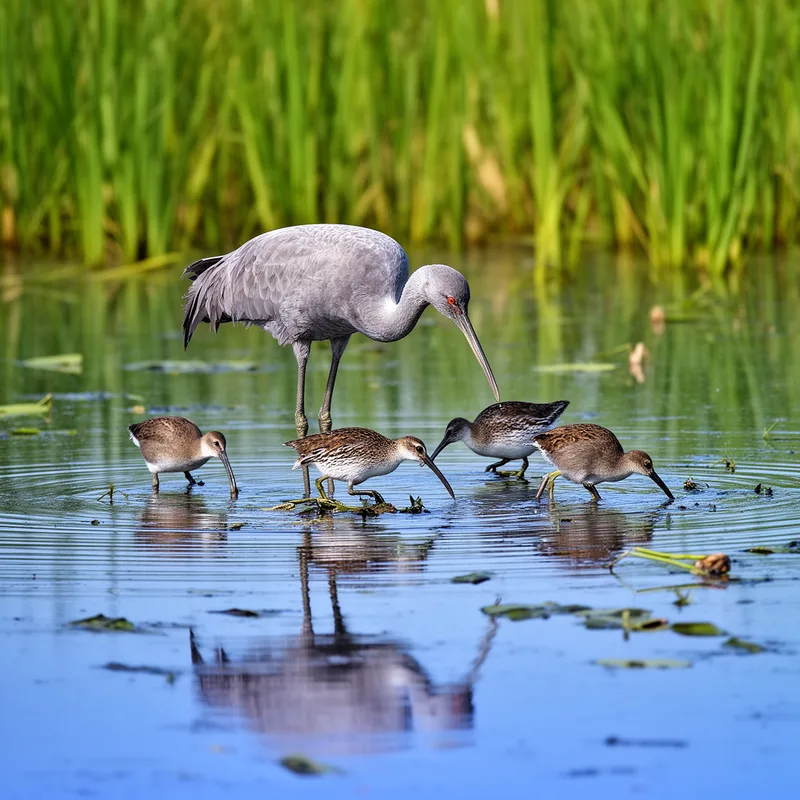
order Gruiformes
- noun
- /ˈɔrdər ˈɡruːɪfɔːrmiːz/
- Specialized
- The wetland reserve is home to several species within the order Gruiformes, including rails and cranes.
Examples
-
Ornithologists are studying population declines in the order Gruiformes to better understand environmental changes.
-
The order Gruiformes includes various species of wading birds.
-
Many birds in the order Gruiformes rely on marshes and wetlands for nesting and feeding.
-
Many birds in the order Gruiformes are found near wetlands.
-
Many birds in the order Gruiformes rely on marshes and wetlands for nesting and feeding.
-
The wetland reserve is home to several species within the order Gruiformes, including rails and cranes.
-
Ornithologists are studying population declines in the order Gruiformes to better understand environmental changes.
Synonyms

A group of birds like cranes, rails and bustards that live in marshes and have long legs and beaks
Surface Forms
Morphology
This phrase is directly compositional: it names the taxonomic order called Gruiformes, so a learner who knows 'order' (a taxonomic grouping) and 'Gruiformes' (the bird group) can derive that it refers to that group of birds. Although scientific jargon is domain-specific, the construction follows a common, cross-linguistic taxonomic pattern and is therefore transparent to learners who know the constituents.
Etymology
Order Gruiformes comes from the old Latin word grus meaning 'crane' and the part -formes meaning 'shaped', so Gruiformes originally meant 'crane-shaped'. This image of long-legged birds standing or wading in marshes explains why the name is used for a group of wetland birds like cranes, rails, and bustards.

