

optical density


 1
7.1
1
7.1
- noun
- /ˈɑptɪkəl ˈdɛnʃɪti/
- Specialized
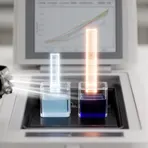
- The optical density of the liquid sample determines how much light can pass through it.
Examples
-
I was under the impression that a dynamic range of 4.0 was absolute black, so an optical density of 4.2 indicates that optical density must not be the same thing as dynamic range.
Academic text (2001) -
These changes included increasing sample volume, decreasing diluent volume, and lowering the optical density cutoff to 70% of the serum value.
Academic text (1992) -
If the test film is not within this optical density range, the problem could lie with the processor rather than the x-ray machine or techniques used.
Academic text (1994) -
Optical density (OD) of the cultures was measured at 600 nm.
Academic text (2015) -
For the Abeta, GFAP, and iron stainings, the coverage as well as the optical density of the staining was quantified.
Academic text (2018) -
Each sample was corrected for its nonspecific background binding by subtracting the optical density values obtained from the blocked wells without serum or antigen.
Blog text (30) -
The suspension was maintained to an optical density of 0.3 x 10^8 CFU/ml estimated spectrophotometrically at a wavelength of 600 nm.
Academic text (2014) -
Seroconversion rates were expressed as the proportion of children whose post-immunisation serum optical density values were >0.1 and exceeded the baseline value by a factor of four.
Academic text (2000) -
The concentration and purity of total RNA were determined by measuring the optical density at 260 nm and a 260 nm/280 nm ratio, respectively.
Academic text (2018) -
Intraplate and interplate reproducibility for optical density values expressed by intraclass correlation coefficient were 0.990 and 0.979, respectively.
Blog text (30)
Synonyms
 1
7.4
1
7.4
A number that shows how much light a substance stops when light passes through it

The amount that film or printing paper blocks light

How much a material does not let light pass through it
Antonyms

How Opaque

Surface Forms
Morphology
The adjective 'optical' (related to light) modifying 'density' (amount per unit) yields a straightforward compositional meaning: a measure of 'density' with respect to light — i.e., how much a substance reduces or attenuates light. This is a regular adjective+noun composition with clear cross-linguistic equivalents (e.g. densidad óptica), so a B1 learner who knows the constituents can infer the basic meaning even if the precise technical measurement requires specialist knowledge.
Etymology
The term optical density comes from the image of light trying to pass through something thick: optical means light and density suggests 'thickness'. Think of fog or dark glass that stops light; optical density measures how much a material reduces the light that goes through it.