
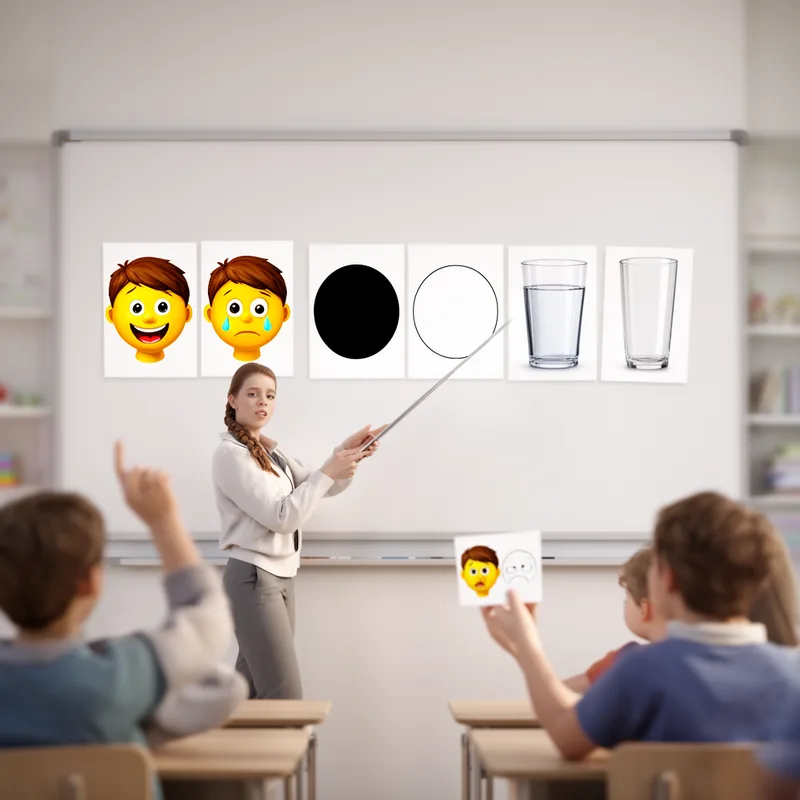
opposite word
- noun
- /ˈɑːpəzɪt wɜrd/
- When learning vocabulary, identifying an opposite word is crucial for expanding one’s understanding of language.
Loading YouTube…
Watch on YouTubeBecause I, when I think when people use myth as the opposite word of truth, I think it undervalues what roles myths have played historically.
- Because I, when I think when people use myth as the opposite word of truth, I think it undervalues what roles myths have played historically.
Examples
-
By the way, just not to be nitpicky, but I do not hold the word fiction as an opposite word to the word truth.
-
Understanding an opposite word helps clarify the meaning of words; for example, 'happy' has the opposite word 'sad'.
-
Because I, when I think when people use myth as the opposite word of truth, I think it undervalues what roles myths have played historically.
-
In discussions of language, the term opposite word is often used to refer to antonyms like 'hot' and 'cold'.
Synonyms

 430
1.0
430
1.0

A word with a completely different meaning from another word
 71
4.2
71
4.2
A situation that is the exact opposite of what was expected
 18
7.9
18
7.9
A person or thing that is the exact opposite of another
 8
6.2
8
6.2
Something that is the opposite of another thing in order or effect
 3
3.2
3
3.2
A word with the opposite meaning of another word
 1
9.3
1
9.3
The direct opposite of something, for example order and chaos

A word that means the exact opposite of another word

A word that shows the opposite of another word
Antonyms

Surface Forms
Morphology
The meaning is directly compositional: 'opposite' (diametrically different) modifies 'word' (a lexical item), so a B1 learner who knows both constituents can infer 'a word with a contrary meaning' without prior exposure. This follows a common cross-linguistic adjective + noun pattern and is therefore fully transparent.
Etymology
The compound opposite word comes from a simple picture of opposite and word: two words facing each other like mirror images or arrows pointing the other way. So an opposite word is a word that means the reverse of another word, or 'opposite'.