
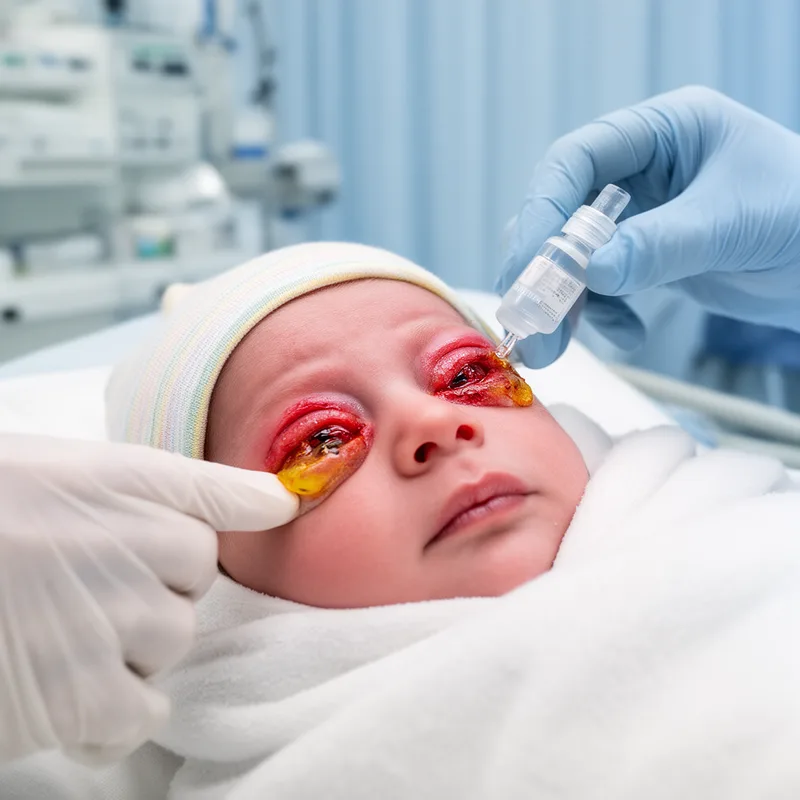
ophthalmia neonatorum
- noun
- /ˌɑfˈθælmiə ˌniːəˈneɪtərəm/
- Specialized
 :
oftalmia neonatal
:
oftalmia neonatal
- To prevent ophthalmia neonatorum, many hospitals administer antiseptic drops to newborns immediately after delivery.
Examples
-
For example, two of the leading causes of blindness and visual impairment in the United States in the early 1900s were ophthalmia neonatorum and trachoma.
Academic text (2006) -
Evidence of the continued presence of ophthalmia neonatorum among newborns was still being reported in the 1930s and 40s.
Academic text (2006) -
Of 116 cases of ophthalmia neonatorum treated at the Massachusetts Eye and Ear Infirmary, physicians had delivered 114, and midwives 2 of the infants.
Academic text (2016) -
If not treated, ophthalmia neonatorum can lead to serious complications for newborns.
-
Doctors monitor newborns closely for signs of ophthalmia neonatorum during their first few days of life.
Surface Forms
Morphology
ophthalmia + neonatorum
The term is fully compositional: 'ophthalmia' denotes eye/conjunctival inflammation and 'neonatorum' (Latin genitive) means 'of newborns', so the meaning 'conjunctivitis in newborns' is directly derivable from the parts. It is a technical, Latin-derived medical phrase used across languages, so a learner who knows both constituents would readily infer the MWE's meaning, albeit the constituents themselves are specialized vocabulary.
Etymology
Ophthalmia neonatorum is a medical Latin name that joins ophthalmia ('eye inflammation') and neonatorum ('newborns'). It paints the picture of an eye infection a baby can get during birth, so today it means 'an eye infection in a newborn'.

