

operatic star


 1
5.6
- noun
- /ˌɒpəˈrætɪk stɑr/
- The operatic star dazzled the audience with her performance.
Examples
-
Many aspiring singers look up to the great operatic stars of the past for inspiration.
-
Last night, the operatic star received a standing ovation for her powerful performance as Tosca.
-
She dreamed of becoming an operatic star and singing on the world's greatest stages.
-
Many young singers aspire to become an operatic star.
-
Many famous operatic stars begin their careers in smaller theaters before moving to larger venues.
-
As an operatic star, she captivated audiences with her powerful voice and dramatic performances.
-
The festival featured an operatic star who was celebrated for her interpretation of classic roles.
Synonyms
 5
4.2
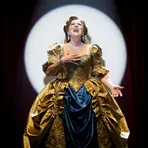
A famous singer who performs leading roles in operas
 3
6.9
A famous woman who sings leading parts in opera
Antonyms

How Famous

Surface Forms
Morphology
The meaning 'a famous singer who performs in operas' is directly and compositionally derived from 'operatic' (pertaining to opera) modifying 'star' (a celebrated public figure). This straightforward adjective+noun combination follows common cross-linguistic patterns, so a B1 learner who knows both words will readily infer the MWE's meaning.
Etymology
The phrase operatic star may come from a simple image: a singer on a big stage who 'shines' like a bright point in the sky. The word opera means a large musical play and star is someone who stands out, so the phrase means a 'famous' singer in opera.