
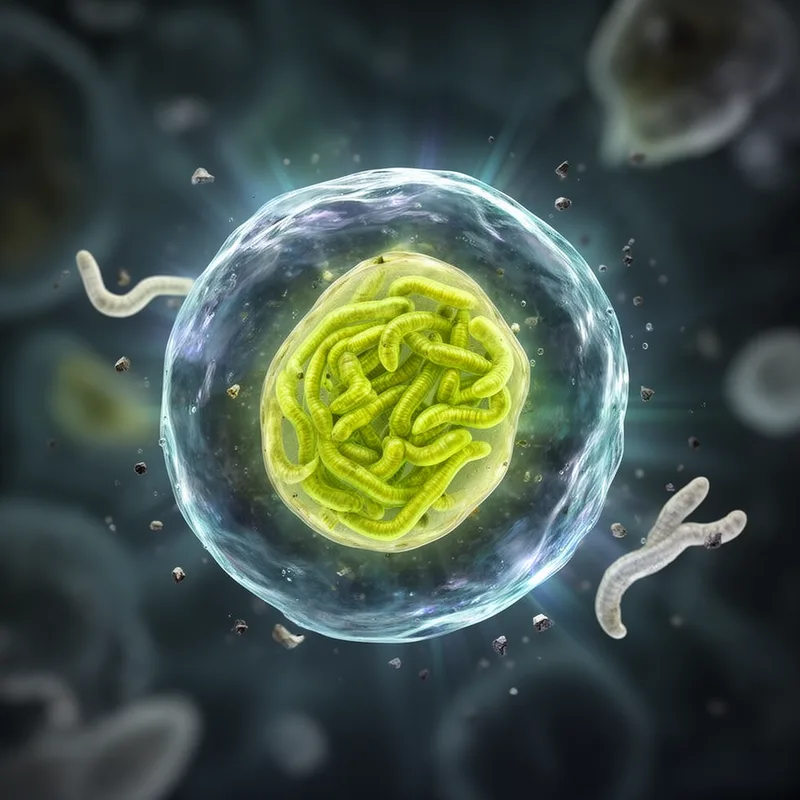
oocyst


 1
9.9
- noun
- /ˈoʊəˌsɪst/
- Specialized
- The resistance of Cryptosporidium oocysts to chlorine and disinfectants leaves a variety of water sources vulnerable to contamination (Heymann, 2004).
- Cryptosporidium oocysts
- protozoan oocysts
- cysts and oocysts
Examples
-
We can accidentally ingest oocysts in contaminated water or unwashed produce, or from playing in sandboxes or cleaning out litter boxes.
-
With increased precipitation and higher temperatures, as seen in patterns in North America, oocysts from these organisms found in fecal matter may be washed into drinking-water supplies, thus exposing the populations to risk through ingestion of contaminated water.
Academic text (2004) -
The result may have been that the majority of the oocysts were lost in the debris.
Academic text (2006) -
Results were recorded as oocysts per 100 liters.
Academic text (2006) -
Cats shedding oocysts generally do so for 5 to 14 days.
Blog text (34) -
Newer regulations that require reducing the number of oocysts to a very low level present a real problem for adequate treatment processes.
Academic text (2000) -
The recovery rate for oocyst load varied depending on sample turbidity and site (Table 3).
Academic text (2006) -
The ProNetic System detects Cryptosporidium oocysts in drinking water.
Academic text (1997) -
The recovery of Cryptosporidium oocysts was severely reduced in high-turbidity water affected by AMD containing high levels of total iron (>6.0 mg/L).
Academic text (2006) -
The ProNetic System detects Cryptosporidium oocysts in drinking water.
Surface Forms
Morphology
Etymology
The word oocyst comes from Greek parts oo- meaning 'egg' and -cyst meaning 'bladder' or 'sac'. So, an oocyst is like an 'egg sac', a tough, protective structure that holds developing parasites.