
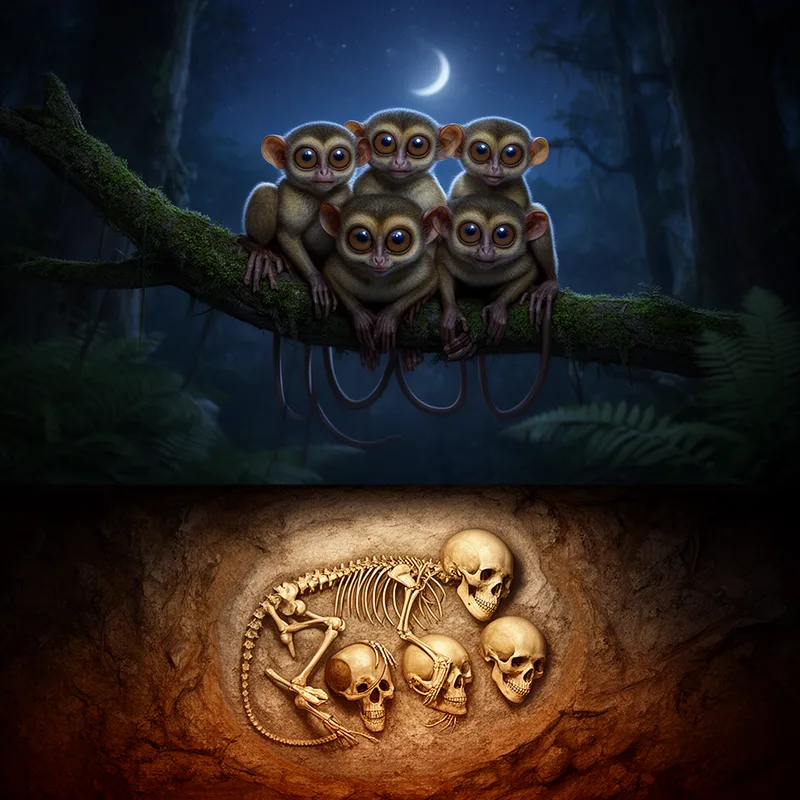
omomyid group
- noun
- /ˈoʊməˌmɪd ɡruːp/
- Specialized
- Fossils of the omomyid group have helped scientists understand primate evolution.
Examples
-
The omomyid group was abundant in North America during the Eocene epoch.
-
Many researchers believe the omomyid group gave rise to modern tarsiers.
-
The omomyid group thrived during the Eocene epoch.
-
Many scientists study the omomyid groups to understand primate evolution.
-
Fossils of the omomyid group have helped scientists understand primate evolution.
-
The omomyid group was abundant in North America during the Eocene epoch.
-
Many researchers believe the omomyid group gave rise to modern tarsiers.
Surface Forms
Morphology
This is a straightforward noun–noun composition: 'omomyid' (a type of extinct primate) + 'group' yields 'a group of omomyids'. The meaning is directly derivable from the constituents and follows a common, cross‑linguistic composition pattern, so a learner who knows both words would understand it.
Etymology
Omomyid group names a set of very small, big-eyed primates that lived 30–50 million years ago; picture tiny, night-active animals jumping through tree branches and eating fruit and insects. That image helps you remember they were 'nocturnal' relatives of tarsiers and early monkeys, and why their fossils help us learn about primate evolution.

