
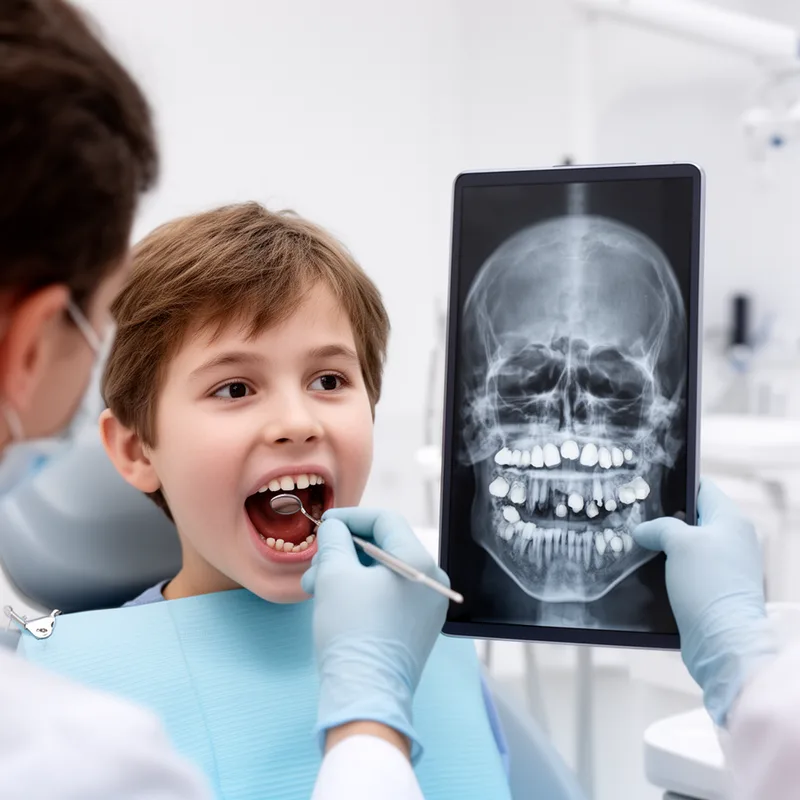
oligodontia
- noun
- /ˌɑlɪɡoʊˈdɒnʃə/
- Specialized
- The dentist diagnosed the child with oligodontia after noticing several missing permanent teeth.
Examples
-
Genetic factors are thought to play a role in the development of oligodontia.
-
Many people with oligodontia experience difficulties with chewing.
-
Due to her oligodontia, she required extensive dental treatment from a young age.
-
The child diagnosed with oligodontia needs special dental care.
-
The dentist diagnosed the child with oligodontia after noticing several missing permanent teeth.
-
Due to her oligodontia, she required extensive dental treatment from a young age.
-
Many people with oligodontia experience difficulties with chewing.
Surface Forms
Morphology
oligodontia = oligodont (opaque) = oligo + odont + ia
The element 'oligo-' and the combining form 'odont-' are specialized Greek medical morphemes not likely known to a B1 learner, so the immediate base is not transparently meaningful.
Etymology
The word oligodontia breaks into three parts: oligo- 'few', odont- 'tooth', and -ia 'condition'. Because odont- is the same root in orthodontist, oligodontia means a 'few teeth' condition, for example when several adult teeth are missing.

