
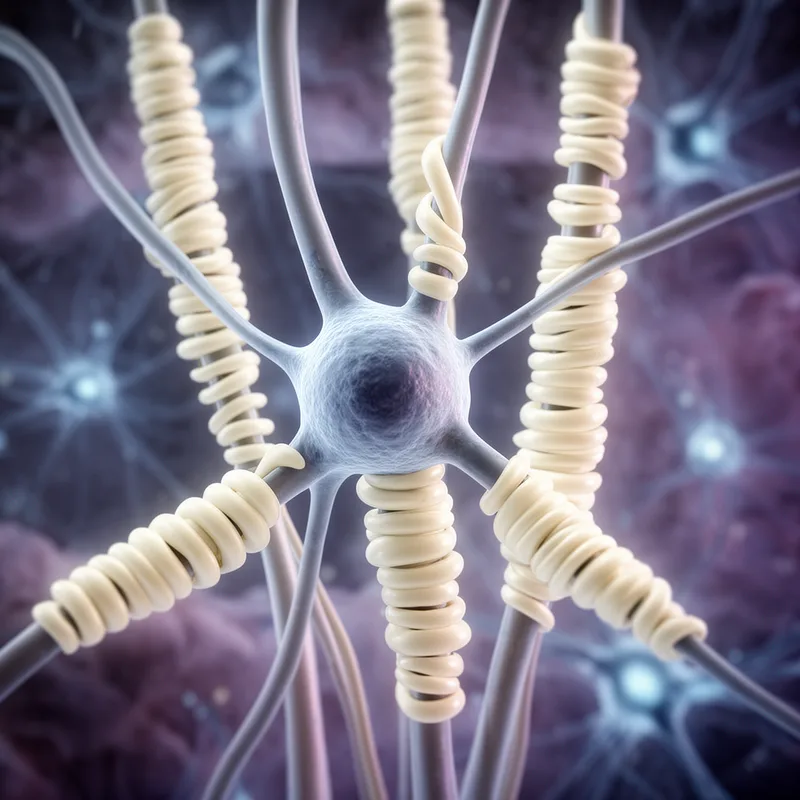
oligodendroglia
- noun
- /ˌɑlɪɡoʊˈdɛndroʊɡliə/
- Specialized
- Demyelinating diseases can damage oligodendroglia and disrupt the formation of the myelin sheath around nerve fibers.
Examples
-
Loss of oligodendroglia leads to significant neurological deficits in multiple sclerosis.
-
Researchers studied the regeneration of oligodendroglia in spinal cord injuries.
-
Demyelinating diseases can damage oligodendroglia and disrupt nerve function.
-
The oligodendroglia play a crucial role in the nervous system.
-
Researchers study oligodendroglia to understand multiple sclerosis.
-
Loss of oligodendroglia results in significant neurological deficits, particularly seen in conditions like multiple sclerosis.
-
Studies have shown that the regeneration of oligodendroglia is vital for recovery after spinal cord injuries.
Synonyms
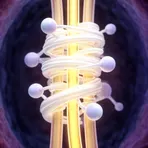
Cells in the brain and spinal cord that make a fatty coating around nerve fibers
Surface Forms
Morphology
oligodendroglia = dendroglia (opaque) = oligo + dendro + glia
The term is formed from Greek combining forms used in technical biomedical vocabulary, so its structure and meaning are not apparent to an average B1 learner.
Etymology
Oligodendroglia breaks into parts: oligo- meaning 'few', dendro- meaning 'tree' as in dendrite, and glia meaning 'glue'. So oligodendroglia are 'few-tree-glue' cells—cells with a few tree-like branches that wrap and insulate nerve fibers with 'myelin', which is why they help nerve signals travel quickly.

