
oleic acid
 2
5.0
2
5.0

- noun
- /oʊˈliːɪk ˈæsɪd/
- Specialized
- Oleic acid occurs as the esters, commonly the triglycerides, which are the greasy materials in cottonseed oil.
- oil high in oleic acid
- form of oleic acid
Loading YouTube…
Watch on YouTubeWell, bacon is also full of oleic acid, making it quite Mediterranean and also very good for your heart.
- Well, bacon is also full of oleic acid, making it quite Mediterranean and also very good for your heart.
Examples
-
This would explain why oleic acid is only partly successful.
-
Well, bacon is also full of oleic acid, making it quite Mediterranean and also very good for your heart.
-
Pure oleic acid would be very toxic to an intact organism, an animal or human.
-
Due to this abundant linoleic acid and oleic acid, this oil is good for reducing serum cholesterol and LDL and increasing HDL levels.
Academic text (2015) -
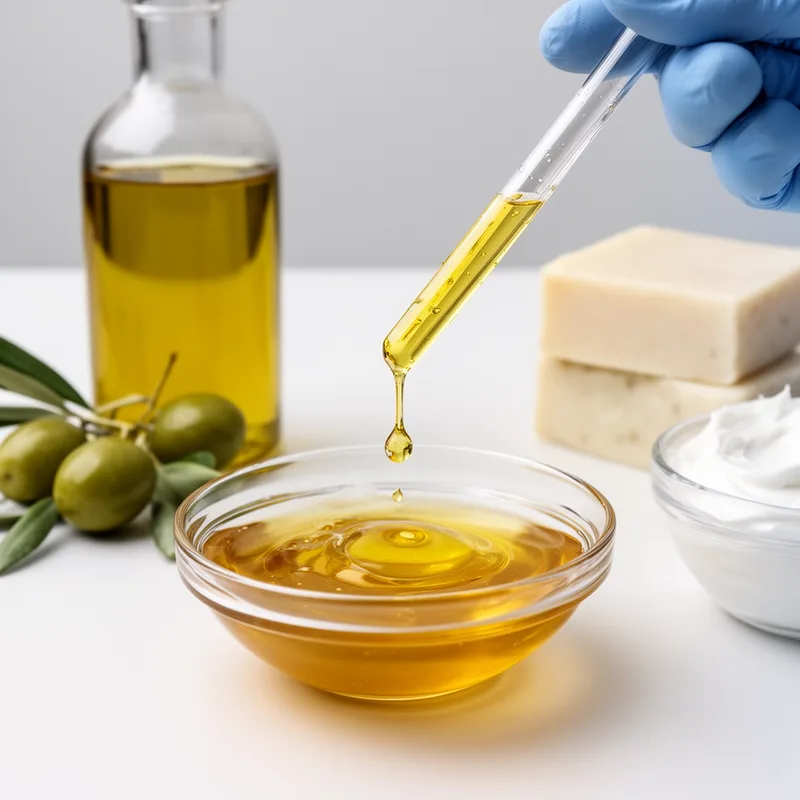
Olive oil is rich in oleic acid, which is known for its heart-healthy properties.
-
The production of many cosmetics includes oleic acid as an essential ingredient.
-
Doctors recommend incorporating oleic acid into your diet for its beneficial effects on cholesterol levels.
Surface Forms
Morphology
This is a compositional noun phrase: 'oleic' specifies the type/source and 'acid' names the chemical class, so a learner who knows both constituents can infer it denotes a kind of acid related to oleic/olive oil. The structure follows regular English adjective + noun naming patterns (and chemical naming conventions), making the meaning predictable rather than idiomatic.
Etymology
Oleic acid comes from an old word for 'oil' because it was first found in olive oil. oleic points to 'oil' or 'olive' and acid shows it is an acid, so the name tells you it is the oily acid found in olive oil and used in soaps and cosmetics.