
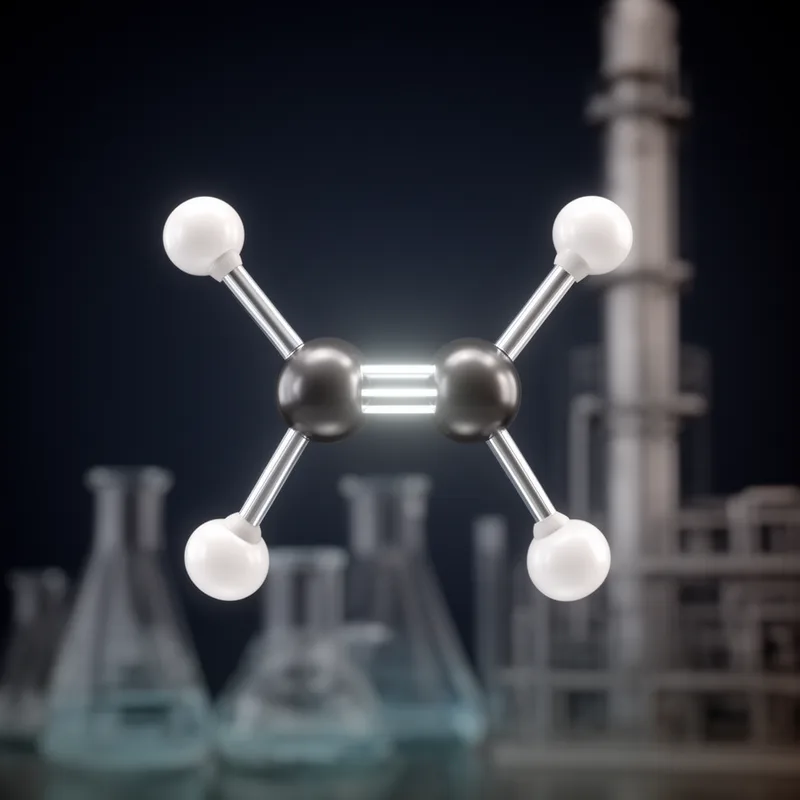
olefin


 1
9.9
1
9.9
- noun
- /ˈoʊlɪfɪn/
- Specialized
- The chemical process used to produce olefins is essential for making many types of plastics.
- olefin copolymer
- cyclic olefin
Examples
-
Cyclic olefin copolymer, which has high temperature stability and good optical properties, is being used more in MEMS applications.
Academic text (2005) -
A view of the off-site construction of twin furnaces, one of four sets for a SABIC olefins plant built by Technip in Saudi Arabia.
Academic text (2011) -
"Is it wool? Nylon? Olefin?
Fiction book (1995) -
I worked on a number of projects, including a new olefins plant under the European contractor Technip.
Academic text (2011) -
And that indeed is, is what what I, what I did with a third material and another brand of cyclic olefin polymer called Topaz.
-
An East/West neutral government (w/ standard political cyclic olefins giving +/-10% regional relation variable.
Blog text (16) -
DIAGRAM: Scheme III; Functionalized norbornene monomers used to prepare polycyclo-olefins for 193-nm resists.
Academic text (2001) -
With these methods, catalytic alkenylation with olefins and direct arylation with unactivated arenes were achieved with excellent selectivity and efficiency.
Blog text (17) -
Ethylene and propylene are the most common types of olefins found in the petrochemical industry.
-
Many household items are made from olefins like polyethylene, which is used to create plastic bags.
Synonyms
A chemical made only of hydrogen and carbon that has a double bond between carbon atoms
A molecule made of hydrogen and carbon with a double bond between two carbon atoms
Surface Forms
Etymology
The word olefin comes from an old name meaning 'oil-maker', from Latin oleum 'oil' and facere 'to make'. People called these substances 'oil-makers' because they often formed oily liquids in reactions, and that's why olefin now names hydrocarbons like ethylene and propylene that have a double bond.