
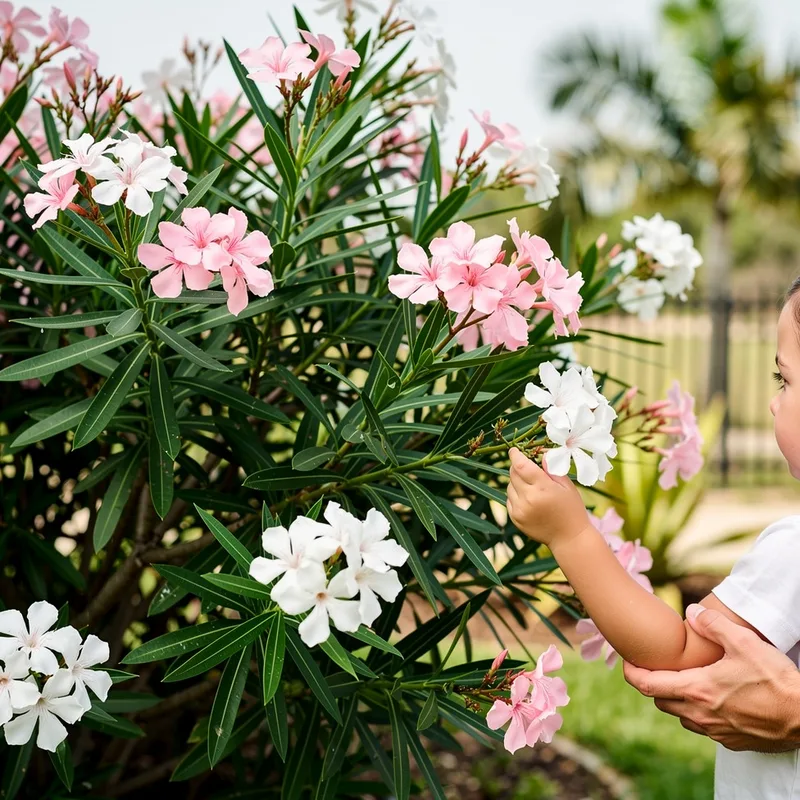
oleander
 3
8.2
3
8.2

- noun
- /oʊˈliːændər/
- Be careful when handling oleander since all parts of the plant are highly toxic.
- pink oleander
- oleander bush
- poisonous oleander
Examples
-
Camellia, crepe myrtle, frangipani, and oleander were observed in these backyards.
Academic text (2004) -
As they talked, I gazed out the window at the oleanders.
Fiction book (2002) -
The oleander will be in bloom.
-
I bet you've never seen an oleander in your life.
-
The house is covered with oleanders on Polonnaruwa Street.
Fiction book (2001) -
When they looked down from their balcony, did they remember a gathering of children in the oleanders?
Fiction book (2000) -
The window over the bed must be open; she can smell the oleander bush outside and hear the twittering of crickets.
Fiction book (1997) -
Erica can sit behind a clump of oleander and watch her daughter play volleyball near the fence.
Fiction book (1994) -
The graceful old building was no longer in sight, obscured by a curtain of oleander and cedar.
Fiction book (1994) -
Purple jacaranda trees competed with pink oleander and blood-red bougainvillea.
Fiction book (1991)
Synonyms
A poisonous evergreen bush with groups of fragrant white, pink or red flowers
An evergreen shrub with narrow leaves and fragrant white, pink, or red flower clusters that is poisonous
Compounds
- Specialized
A poisonous evergreen bush with groups of fragrant white, pink or red flowers


A tropical shrub or small tree with shiny green leaves and yellow flowers, all parts of which are highly poisonous
How Poisonous

Surface Forms
Etymology
The word oleander comes from an old Greek name oleandron, probably from olea meaning 'olive', because its long, narrow leaves look like olive leaves. That's why oleander now names the poisonous evergreen shrub with showy, sweet-smelling flowers.