
oleaceous
- adjective
- /oʊˈliːəʃəs/
- Specialized
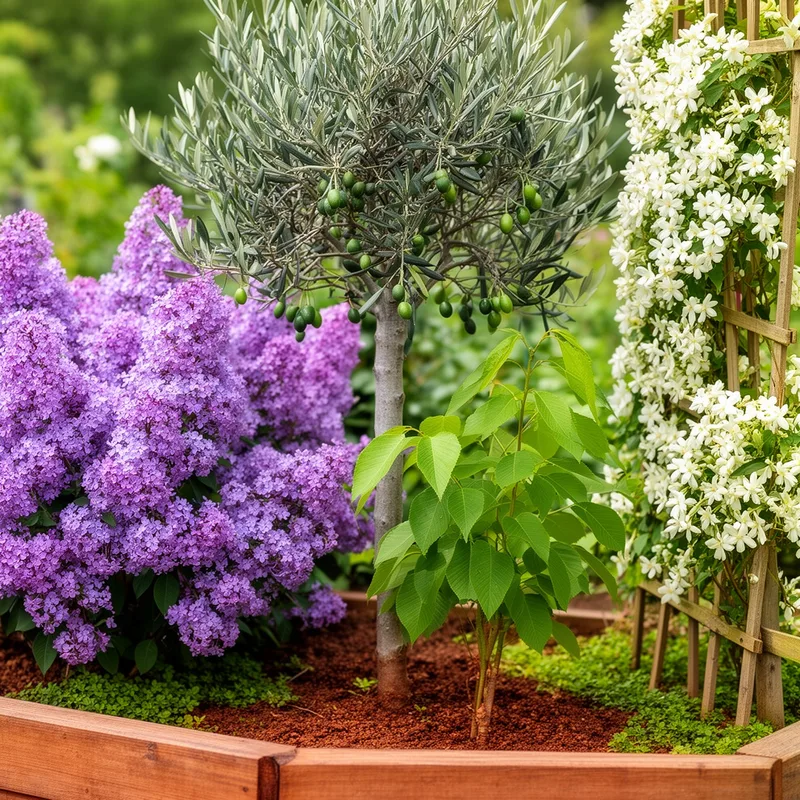
- The garden features several oleaceous trees, including lilacs and jasmine.
Examples
-
Researchers are studying the medicinal properties of oleaceous species such as the olive and ash tree.
-
Many oleaceous species are used for their oil.
-
Many oleaceous plants are valued for their ornamental flowers and fragrant blossoms.
-
The oleaceous plants thrive in warm climates.
-
Many oleaceous plants are used in landscaping for their beautiful flowers and lush foliage.
-
The gardener planted several oleaceous shrubs to create a fragrant border along the path.
-
In her research, she focused on oleaceous species that are native to the Mediterranean region.
Surface Forms
Morphology
oleaceous = olea (opaque) = olea + ceous
This is a learned botanical adjective built from the Latin/technical stem olea- plus a classical adjectival suffix, so the meaning is not readily predictable for an average learner.
Etymology
Oleaceous comes from the Latin word olea, meaning 'olive', so it describes plants that are like or belong to the olive family. That's why olives, lilacs and jasmine are called oleaceous.

