
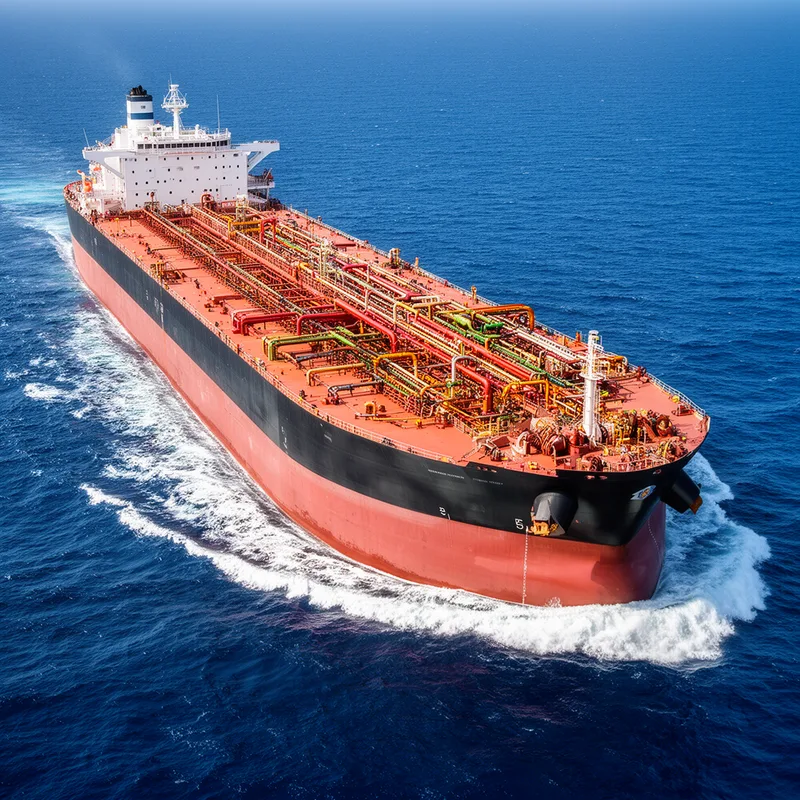
oil tanker
 13
2.5
13
2.5

- noun
- /ɔɪl ˈtæŋkər/
- Specialized
- The enormous oil tanker was filled with petroleum products destined for the refinery.
Examples
-
For instance, in 1999, an oil tanker, the Erika, sank off Brittany and polluted 250 miles of French coastline.
Academic text (2016) -
Oil tankers in operation today number 3,500 and include some of the world's largest ships.
Academic text (2008) -
Remember that oil tanker that caught fire in Long Beach?
Fiction book (1992) -
However, oil tankers are not the only concern.
Academic text (2016) -
All the oil tankers in the world are totally controlled by computers.
-
Each day more than three thousand oil tankers are somewhere on the world's oceans.
Academic text (1993) -
Piloting today's giant oil tankers is a big responsibility.
-
PHOTO (BLACK & WHITE): An oil tanker is anchored in the Persian Gulf off the coast.
Academic text (2010) -
The Torrey Canyon was a Liberian oil tanker, which went aground in international waters off the coast of Cornwall.
Academic text (2017) -
Burgess v. M/V Tamano 159 arose following the grounding of an oil tanker off the coast of Maine.
Academic text (1990)
Synonyms
 57
3.5
57
3.5
A very large ship that carries oil in bulk
 4
5.1
4
5.1
A very large ship that carries huge amounts of oil
 1
7.1
1
7.1
A large ship that carries crude oil

A large ship that carries liquids like oil in large amounts
How Big

Surface Forms
Morphology
The meaning 'a large ship for transporting crude oil' is directly compositional from 'oil' (the cargo) + 'tanker' (a vessel for carrying liquid cargo). This noun–noun compound follows a straightforward, cross-linguistically common pattern, so a B1 learner who knows both constituents would readily infer the MWE's meaning.
Etymology
Oil tanker comes from the words oil (what it carries) and tanker (a ship built to hold liquid in large tanks). Picture a huge ship full of metal tanks of oil, and you can see why an oil tanker means 'a large ship that carries oil'.