
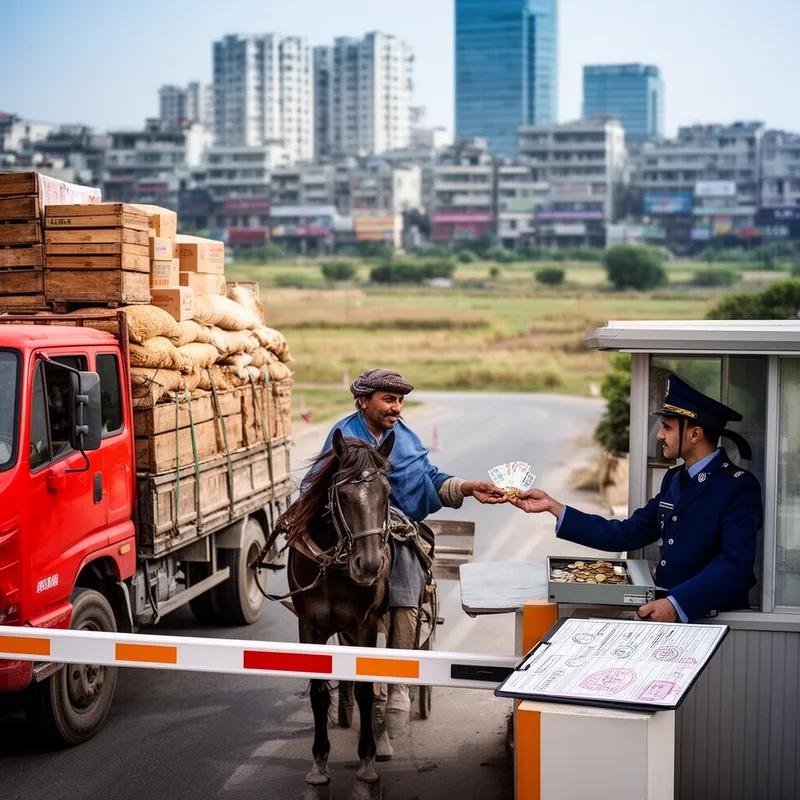
octroi
- noun
- /ɒkˈtrɔɪ/
- Archaic
- The merchants were required to pay octroi before bringing their goods into the city.
Examples
-
The city imposed an octroi on all goods entering the market.
-
Many traders complained about the octroi fees being too high.
-
Many cities abolished octroi in the twentieth century to simplify trade.
-
The city's revenue from octroi declined after new tax laws were implemented.
-
The merchants were required to pay octroi before bringing their goods into the city.
-
The city's revenue from octroi declined after new tax laws were implemented.
-
Many cities abolished octroi in the twentieth century to simplify trade.
Synonyms

 71
3.0
71
3.0

A tax you pay on goods brought into or sent out of a country
 1
3.5
1
3.5
A tax the government charges on goods brought into or sent out of a country
 1
4.1
1
4.1
A tax the government charges on goods brought into a country

 1
2.8
1
2.8
A tax the government charges on goods brought into or taken out of a country
Surface Forms
Etymology
Octroi comes from old French octroyer, which means 'to grant' or 'allow'. Towns were given the right to charge a small tax on goods entering the gates, so octroi became the name of that tax.