

oblong woodsia
- noun
- UK
- The oblong woodsia is a common fern found on rocky cliffs in northern regions.
Examples
-
We identified several oblong woodsia ferns growing near the mountain trail.
-
The oblong woodsia thrives in rocky outcrops throughout the northern forests.
-
Botanists often study oblong woodsia for its ability to survive in harsh, rocky environments.
-
The oblong woodsia thrives in rocky areas.
-
Have you seen the oblong woodsia in the garden?
-
Many hikers admire the resilience of oblong woodsia growing in harsh, rocky soils.
-
In spring, the oblong woodsia displays its lush, lance-shaped fronds among the stones.
Synonyms

A small fern with rusty-brown stalks and divided leaves that grows on rocks in cold northern places
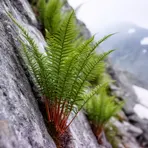
A fern with rusty-brown stalks and long, narrow divided leaves that grows on rocks in northern cooler areas

A small fern that grows on rocks in cool northern areas with brown stalks and long divided leaves
Surface Forms
Morphology
The phrase is directly compositional: 'Woodsia' names a type of fern and 'oblong' simply describes its shape, so the meaning is a Woodsia fern that is oblong in form. This adjective + noun pattern is a standard, cross-linguistically common construction that a B1 learner who knows both words can readily interpret.
Etymology
Oblong woodsia may come from two simple ideas: oblong describes the long, narrow shape of its leaf parts, and woodsia is the plant name taken from a plant expert called Woods who studied these ferns. So the name paints the picture of a long-shaped 'fern' connected to the name Woods, which makes the plant easier to remember.

