
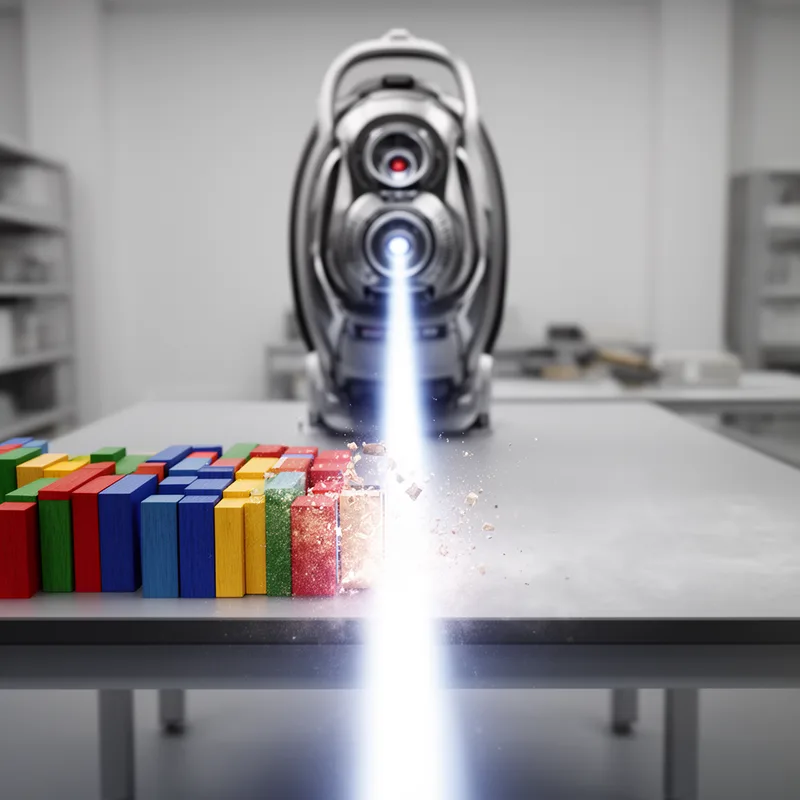
obliterator
- noun
- /əˈblɪtəˌreɪtər/
- The demolition crew acted as obliterators of the old building, completely erasing it from the landscape.
Examples
-
Here's a video of Chamale winning the fratricide match against my own Phyrexian Obliterator-headed Horrors.
Blog text (13) -
Like the one-hit obliterator.
-
Any arguments from tavern proprietors were cut short with Obliterator.
Fiction book (1993) -
I don't think that's how the one-hit obliterator works.
-
More than most stories (the "political" story "Ivy Day in the Committee Room" is, perhaps significantly, a serious contender), "Counterparts" concentrates on alcohol as an obliterator of consciousness and thus of judgment.
Academic text (1991) -
The tornado served as an obliterator, flattening everything in its path.
-
As a skilled artist, she became an obliterator of uncertainties, leaving no trace of doubt behind.
Synonyms

 39
5.5
39
5.5

A person or thing that causes great damage
 5
8.5
5
8.5
A person or thing that completely destroys something
 4
5.7
4
5.7
A person or thing that removes something unwanted, for example pests and water
 3
7.9
3
7.9
A person or thing that destroys something
 2
9.9
2
9.9
A fictional weapon that destroys objects by turning them into gas
 1
8.2
1
8.2
A person or thing that defeats others very easily and completely
 1
4.3
1
4.3
A person or machine that gets rid of waste, especially food scraps
 1
7.4
1
7.4
A person or thing that causes a lot of damage to something


 1
7.0
1
7.0
A person who destroys things or causes a lot of damage

A person or thing that completely removes something unwanted

A person or thing that destroys something completely, like pulling trees out by the roots

A person or thing that removes unwanted parts to make something clean
A person or machine that destroys buildings to clear land

Someone or something that causes great damage

A person or thing that causes ruin
Antonyms

How Destructive
 39
5.5
39
5.5
Surface Forms
Morphology
obliterator = obliterate (transparent) = obliterate + or
Regular agent nominalization from the verb 'obliterate' via the productive suffix '-or', so the meaning is predictable from the base verb.
Etymology
Obliterator comes from the Latin word obliterare, built from ob- 'against' and littera 'letter', and it originally meant 'to wipe out letters' or erase writing. That's why an obliterator is something that 'wipes out' or completely removes all traces of something.