

obeisance
 3
9.9
3
9.9

- noun
- /oʊˈbeɪsəns/
- Literature
- During the ceremony, all the guests made a deep obeisance to honor the dignitaries.
- pay obeisance
Examples
-
In the court, it was expected to cease conversation and perform the ritual, reverent obeisance.
Fiction book (1991) -
When you are in the presence of His Holiness... you must always be standing... bent in obeisance, hands folded in supplication.
-
We do obeisance to thee.
-
In recent years, the Group of Seven has paid obeisance to this logic.
Academic text (1995) -
A guard made obeisance as he reached the gang tube.
Fiction book (2001) -
I pray that you are in good health night and day, and I always make obeisance before all the gods on your behalf.
-
You must come immediately to the capital, Your Highness, and make your obeisance to His Majesty.
Fiction book (1991) -
In other words, the government does not have the power to establish an orthodoxy and compel obeisance to it.
Academic text (2002) -
The king pauses briefly on the balcony, taking in the air and the obeisance of his nobles.
Fiction book (1996) -
Over time, it has gained stature such that it now "commands obeisance," as Doris so aptly put it (personal communication, 2002).
Academic text (2002)
Synonyms
 61
6.8
61
6.8
Public respect shown to someone or something in a formal ceremony
 53
1.0
53
1.0
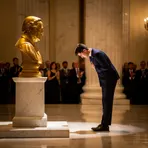
An act of bending the head forward to show respect
 34
7.8
34
7.8
Polite respect that makes you accept someone's wishes or opinions
 4
6.0
4
6.0
A bow or action that shows deep respect to someone
 1
2.7
1
2.7
Bending the head or upper body forward to show respect
How Deferential

Surface Forms
Etymology
Obeisance comes from Old French and the Latin verb obedire, which means 'to obey' and is the same root as the English word obey. That's why an obeisance is a bow or small gesture that shows respect or obedience, like saying with your body that you accept someone's authority.