

numismatology
- noun
- /njuːˌmɪz.məˈtɑː.lə.dʒi/
- Specialized
- She has a deep interest in numismatology, spending weekends researching rare coins in museums.
Examples
-
Many historians use numismatology to understand ancient economies and trade networks across regions.
-
Many students join the club to learn about numismatology and expand their coin collections.
-
She studies numismatology at the university.
-
The museum has a section dedicated to numismatology.
-
Many students join the club to learn about numismatology and expand their coin collections.
-
The museum has a section dedicated to numismatology where visitors can view historical currencies.
-
She has a deep interest in numismatology, spending weekends researching rare coins in libraries.
Synonyms

 1
3.1
1
3.1

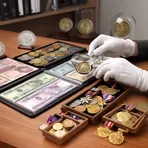
A hobby of keeping and studying coins and paper money

 1
9.9
1
9.9
The study or collection of coins, paper money, and medals

Collecting coins as a hobby to study or enjoy them
How Specialized

Surface Forms
Morphology
numismatology = numismat + ology
The suffix -ology signals 'study of', but the base numismat- is not a productive or transparent English word for most learners.
Etymology
The word numismatology comes from the Greek root nomisma meaning 'coin' and the ending -logy meaning 'study', the same -logy you see in biology. So, numismatology is the study of coins, paper money, and medals.