
nucleophile


 1
9.3
- noun
- /ˈnjuːklɪəˌfaɪl/
- Specialized
- Derivatization of starting materials to incorporate suitable leaving groups has also been explored, as has the use of various bases to deprotonate the alcohol nucleophile.
- nucleophile attacks
Loading YouTube…
Watch on YouTubeNevertheless, the reaction between the aldehyde and the nucleophile that phyolate is readily reversible.
- Nevertheless, the reaction between the aldehyde and the nucleophile that phyolate is readily reversible.
Examples
-
Because the first step doesn't involve the nucleophile, only the second step.
-
A fluoride is a horrid nucleophile as we saw, right?
-
So that or some nucleophile here.
-
So the enol is going to be a very good nucleophile and it's going to attack the carbonyl.
-
A large variety of alcohol nucleophiles (including primary, secondary, tertiary, and functionalized examples) and allyl alcohol electrophiles have been screened.
Blog text (1) -
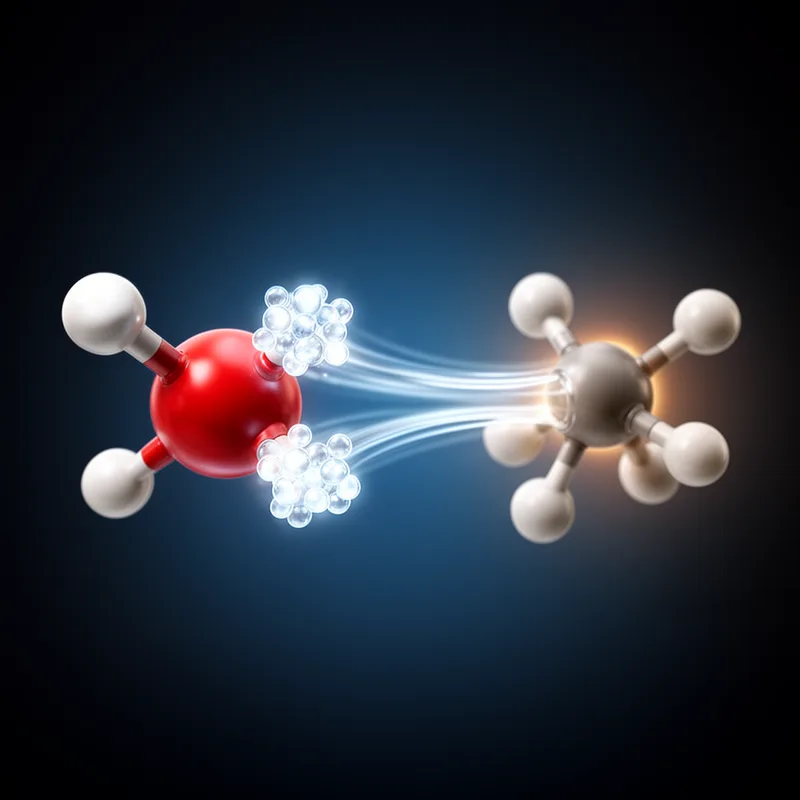
In a nucleophilic reaction, the nucleophile donates an electron pair to form a new bond with the substrate.
-
The strength of a nucleophile depends on its ability to donate electrons to positively charged atoms.
-
During the chemical reaction, the nucleophile surrounded the carbon atom, forming a stable bond.
Surface Forms
Morphology
nucleophile = nucleo + phile
Although the term is built from classical combining forms meaning roughly 'nucleus' and 'loving,' the technical chemical meaning 'electron-pair donor' is not transparently predictable for an average learner.
Etymology
The word nucleophile comes from nucleus meaning 'center' or 'kernel' and -phile meaning 'lover'. So a nucleophile is like a 'lover of the center' — in chemistry it looks for positive centers (nuclei) and gives an electron pair to make a bond.