
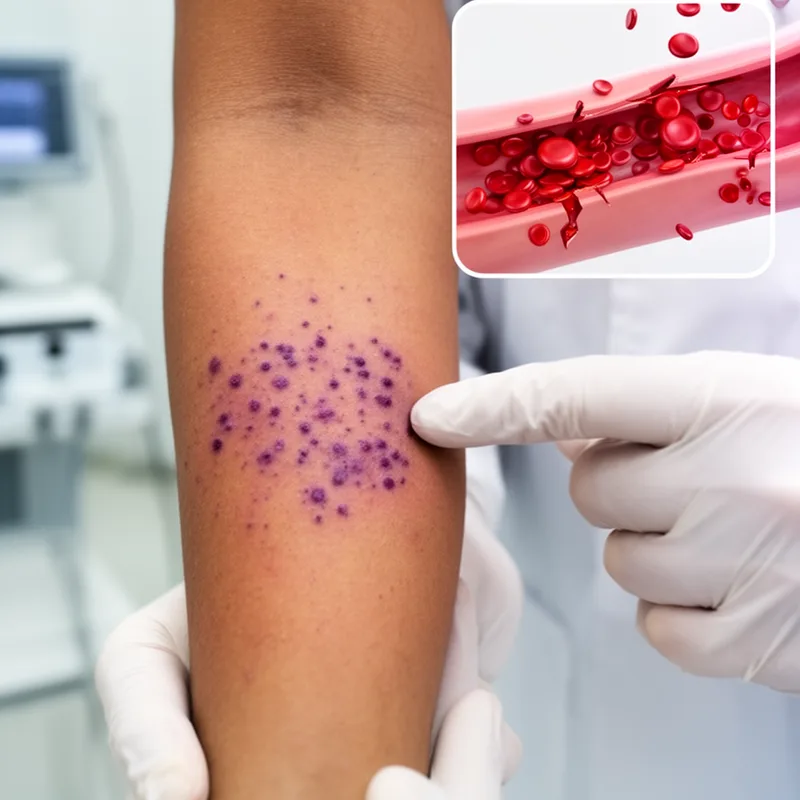
nonthrombocytopenic purpura
- noun
- /nɒnˌθrɒmbəʊsɪtəʊˈsiːtəpɪnɪk ˈpɜːrpjʊrə/
- Specialized
- Unlike thrombocytopenic purpura, nonthrombocytopenic purpura usually occurs despite a normal platelet count.
Examples
-
The patient was diagnosed with nonthrombocytopenic purpura after antibiotics caused capillary damage.
-
Cases of nonthrombocytopenic purpura often resolve when the underlying infection or drug exposure is treated.
-
Doctors diagnosed her with nonthrombocytopenic purpura after the tests.
-
The symptoms of nonthrombocytopenic purpura can be quite alarming.
-
Patients with nonthrombocytopenic purpura may experience skin discoloration due to capillary fragility.
-
The dermatologist explained that nonthrombocytopenic purpura can be associated with certain medications that affect blood vessels.
-
After examining the symptoms, the doctor confirmed the diagnosis of nonthrombocytopenic purpura, emphasizing the need for monitoring.
Synonyms
 1
9.9
1
9.9

Purple spots on the skin caused by bleeding under the skin
Surface Forms
Morphology
nonthrombocytopenic + purpura
The phrase is a straightforward adjective–noun composition: 'nonthrombocytopenic' (= not thrombocytopenic, i.e. not caused by low platelet count) modifies 'purpura' (purple skin spots from bleeding), so the overall meaning is directly derivable as purpura not caused by low platelets. Although the vocabulary is technical and low-frequency, the semantics are transparent and compositional for a learner who knows the constituent terms and medical morphemes.
Etymology
Nonthrombocytopenic purpura gives a clear picture. Thrombocytopenic means low platelets and purpura are purple spots from blood under the skin. The 'non' part shows these spots happen even when platelets are normal, often because tiny blood vessels are damaged by infection or drugs, so the name means 'purple spots not caused by low platelets'.