

nonsensory
- adjective
- /nɑnˈsɛnˌsɔri/
 :
no sensorial
:
no sensorial
- The artist aimed to convey feelings through nonsensory experiences that could not be seen or touched.
- nonsensory prehension
- nonsensory perception
- nonsensory knowledge
Examples
-
For the potential of the modem age to be realized, the renewal of thinking and the development of nonsensory, qualitative ways of knowing become essential.
Academic text (1992) -
Genuine knowledge of nonsensory qualities is no more possible here than it was deemed to be at the beginning of the scientific revolution.
Academic text (1992) -
In the process theology and philosophy of David Griffin, the reality and importance of nonsensory knowledge is given central place.
Academic text (1992) -
In any case, both men affirmed the reality of nonsensory perception.
Academic text (1991) -
Although it is hidden to sensory perception, it is not in every case hidden to nonsensory prehension.
Academic text (1991) -
Nonsensory perceptions can also become conscious with a similar clarity and force.
Academic text (1991) -
The first criterion is that we develop ways of knowing the nonsensory realities, apart from which the sensible world lacks meaning and enjoyment.
Academic text (1992) -
This allowance for nonsensory perception enabled both thinkers to have what Steiner called an "epistemological monism."
Academic text (1991) -
We human beings must already presuppose a minimum intuition of nonsensory realities as the irreducible possibility of even our ordinary, sense-bound knowing itself.
Academic text (1992) -
Understanding philosophical concepts often involves nonsensory reasoning rather than relying on our five senses.
Synonyms

Not for the senses but for the mind
Antonyms


How Sensory

Surface Forms
Morphology
Etymology
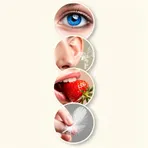
Nonsensory is made of non- meaning 'not' and sensory from sense, which is about 'feeling' with your eyes, ears, skin, tongue or nose. So nonsensory means 'not related to the senses', for example ideas or influences that do not come from sight, hearing, touch, taste or smell.