
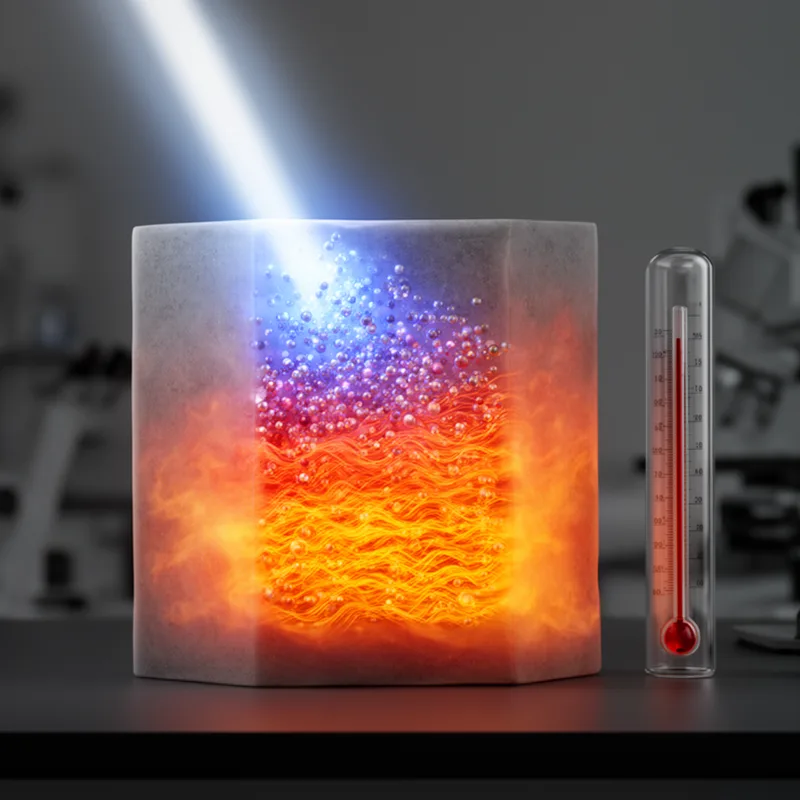
nonradiative
8.4
Energy that does not leave as light but becomes heat inside a material
- adjective
- /ˌnɒnˈreɪdiˌeɪtɪv/
- Specialized
:
no radiativa
- In many electronic devices, charge carriers lose energy through nonradiative processes instead of emitting light.
Examples
-
In silica-based glasses, excited Prsup3+ ions relax too rapidly via nonradiative processes for practical use.
Academic text (1993) -
(Any decrease of the total intensity is due to field-induced nonradiative processes such as interface recombination.)
Academic text (1994) -
The nonradiative decay of energy in certain materials allows for more efficient heat management.
-
Researchers found that the nonradiative mechanisms in solar cells help improve their overall efficiency.
Synonyms

6.4
Not giving off harmful rays like X-rays
transfers energy internally by conversion rather than emitting it as radiation
Antonyms


How Radiative

Surface Forms
nonradiative positive
Morphology
Etymology
Nonradiative breaks into non- meaning 'not' and radiate, from Latin radius meaning 'ray'. So nonradiative means 'not sending out rays': the energy stays in the system or turns into heat instead of light.