
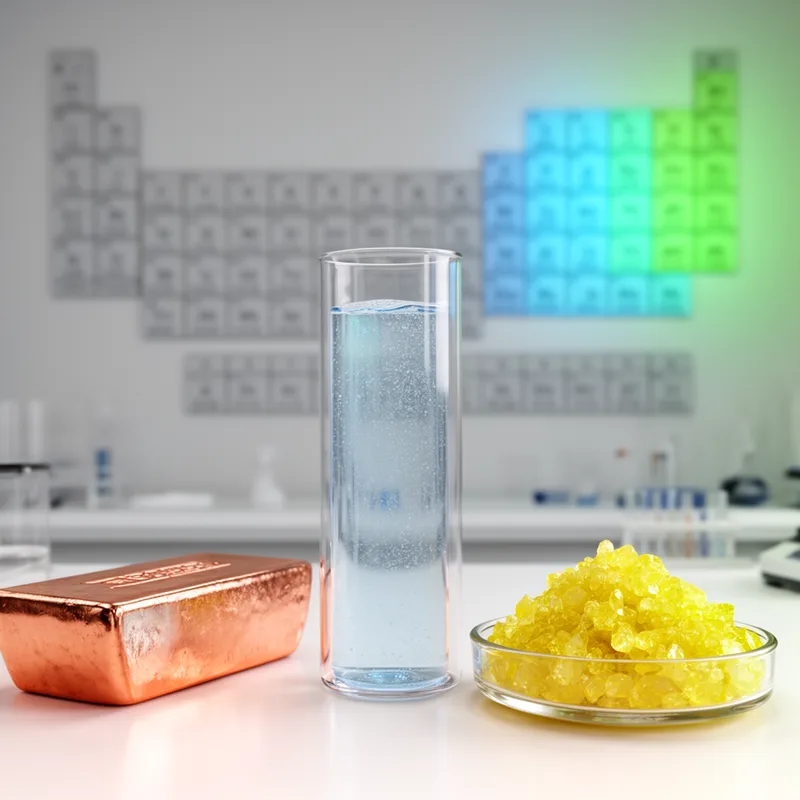
nonmetal


 1
5.2
1
5.2
- noun
- /ˈnɒnˌmɛtəl/
- Specialized
- Nonmetals such as sulfur and phosphorus are essential for various biological processes.
- metals and nonmetals
Examples
-
Capacitive sensors have been designed as an alternative to inductive proximity switches because they can sense a wider range of materials, including metals and nonmetals.
Academic text (1997) -
"So tell me, what's a cute nonmetal like you doing in a place like this?"
Fiction book (1994) -
Made of composite materials, these horizontal sand filters and nonmetal tanks offer high strength and corrosion resistance.
Academic text (1998) -
Metal/nonmetal combinations are particularly efficient because the large differences in dielectric constant result in strong light-scattering effects.
Academic text (1995) -
As shreds are conveyed from the shredder, nonmetals, called "fines" or "fluff," and very small metals are vacuumed out of the mass.
Academic text (2008) -
In the periodic table, nonmetals are typically found on the right side and include elements like oxygen and nitrogen.
-
When studying chemistry, it is important to understand the properties of nonmetals, as they do not conduct electricity like metals.
Antonyms

How Metallic

Surface Forms
Morphology
Etymology
Nonmetal is made of non- 'not' and metal, so a nonmetal is an element that is 'not a metal'. That's why elements like oxygen or sulfur are called nonmetals: they lack metal traits such as shine, easy bending, or carrying electricity.