
nondisjunction


 1
9.9
- noun
- /ˌnɒndɪsˈdʒʌŋkʃən/
- Specialized
- The study on embryonic development revealed that nondisjunction significantly increases the risk of trisomy.
Examples
-
Nondisjunction can lead to conditions like nondisjunction due to an abnormal number of chromosomes.
-
When this does not happen, nondisjunction occurs.
Academic text (2009) -
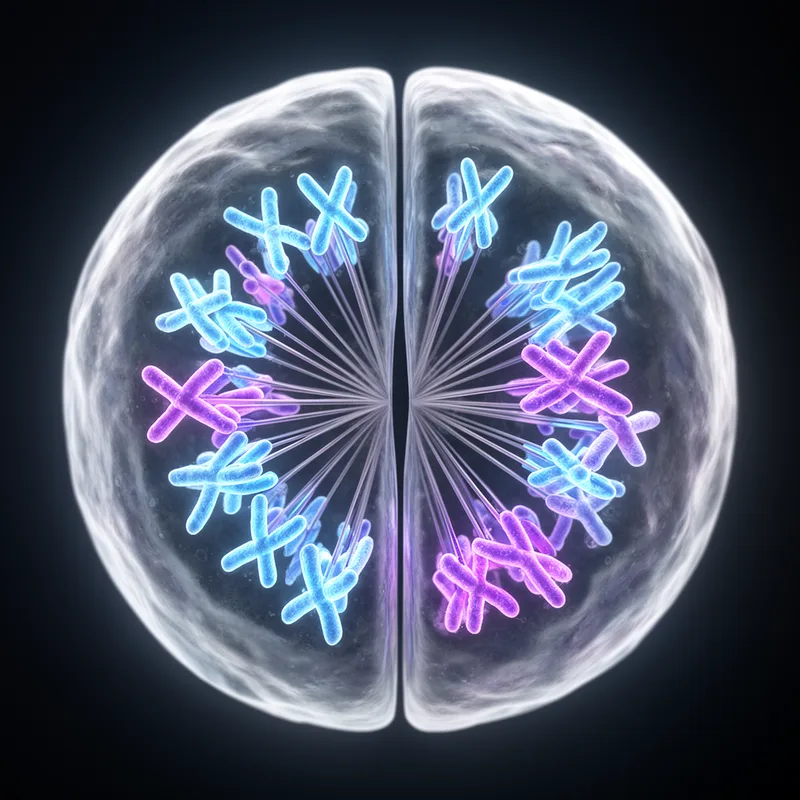
During cell division, when chromosomes fail to separate, this phenomenon is known as nondisjunction.
Surface Forms
Morphology
nondisjunction = disjunction (transparent) = non + disjunction
Formed by adding the negating prefix 'non-' to 'disjunction', so the meaning 'not (or failure of) disjunction' is directly derived, though the term is technical.
Etymology
Nondisjunction is made of parts: non- meaning 'not', and dis- plus junction, where dis- means 'apart' and junction means 'joining', so the whole idea is 'not separating'. So, nondisjunction describes when chromosomes fail to separate during cell division and a cell ends up with too many or too few chromosomes.