
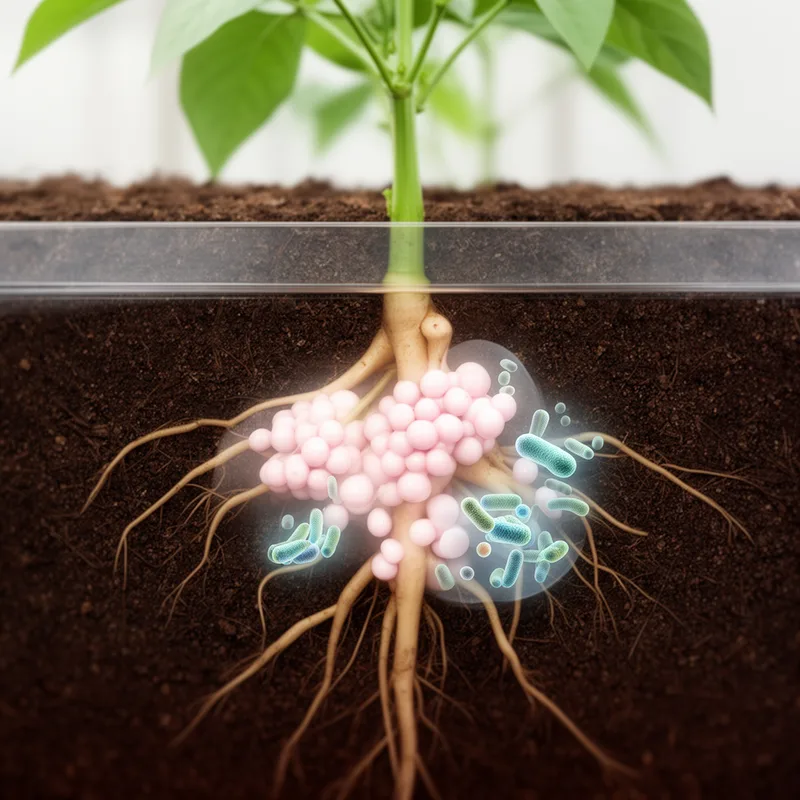
to nodulate
- verb
- /ˈnɒdʒʊleɪt/
- Specialized
- Plants nodulate to form beneficial relationships with bacteria.
Examples
-
Legume roots often nodulate when they interact with certain soil bacteria.
-
Scientists study how plants nodulate to improve crop yields and soil health.
-
If the soil lacks the right bacteria, the plants may not nodulate properly.
-
The roots of legumes nodulate in response to rhizobium bacteria.
-
Certain bacteria have the ability to nodulate the roots of leguminous plants, enhancing their growth.
-
Farmers often choose to plant species that can nodulate, improving soil fertility through nitrogen fixation.
-
Research shows that some trees can nodulate and form symbiotic relationships with specific soil microorganisms.
Surface Forms
Morphology
Etymology
Nodulate comes from the Latin word nodus, meaning 'knot', and the same root gave us nodule, a 'small lump'. So to nodulate is to form little lumps, like the small bumps plant roots make when they team up with helpful bacteria.

