
nocturia
- noun
- /nɒkˈtjʊəriə/
- Specialized
- The same EMHF/yourprostate.eu research suggests that nocturia, frequency, and urgency are the symptoms of most concern to men.
Examples
-
OSA symptoms include snoring, sleepiness, tiredness during the day, nocturia, memory loss, and hypertension.
Academic text (2012) -
Nocturia: having to get up at night to urinate.
Academic text (2012) -
Nocturia - having to get up at night to urinate
Academic text (2012) -
Nocturia: Over the past month, how many times did you typically get up to urinate from the time you went to bed until the time you got up in the morning?
Academic text (2012) -
Nocturia: over the past month, how many times did you most typically get up to urinate from the time you went to bed until the time you got up in the morning?
Academic text (2012) -
* Storage: frequency, urgency, urge incontinence, and nocturia.
Academic text (2010) -
Research carried out by the European Men's Health Forum via its yourprostate.eu website suggests that nocturia, followed by frequency and urgency, are the symptoms of most concern to men.
Academic text (2012) -
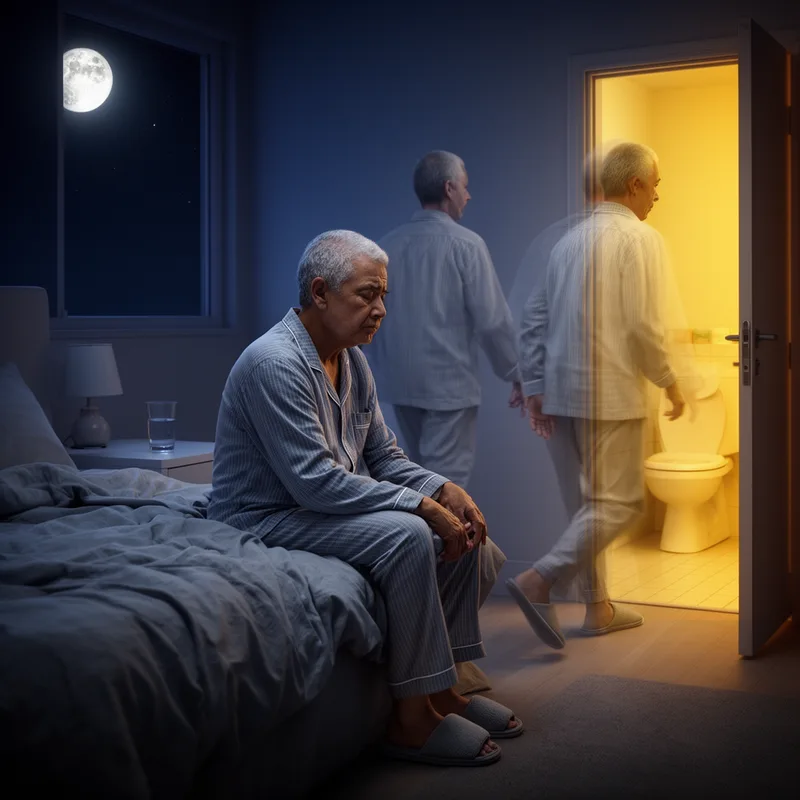
Nocturia is a condition that causes a person to wake up multiple times at night to pass urine.
-
Patients with nocturia often report having to visit the bathroom more than twice during the night.
-
Dealing with nocturia can significantly disrupt a person's sleep pattern due to frequent nighttime urination.
Synonyms
A condition that makes you wake up to pee many times at night
Surface Forms
Morphology
nocturia = noct + uria
The first combining form 'noct-' (night) is recognizable via words like 'nocturnal', but '-uria' is a specialised medical combining form for urination, so the full term is only partially transparent to general learners.
Etymology
Nocturia comes from two parts: noct- meaning 'night', seen in nocturnal, and -uria meaning 'urination', seen in urine. So nocturia simply means needing to urinate a lot during the night.

