
nociceptor
 2
9.7

- noun
- /ˈnoʊsɪˌsɛptər/
- Specialized
- Just in the last few years, a group at Roche Biosciences, in Palo Alto, California, has identified a sodium channel that is TTX resistant and exists in nerve cells called nociceptors, which are pain receptors.
- receptors called nociceptors
Examples
-
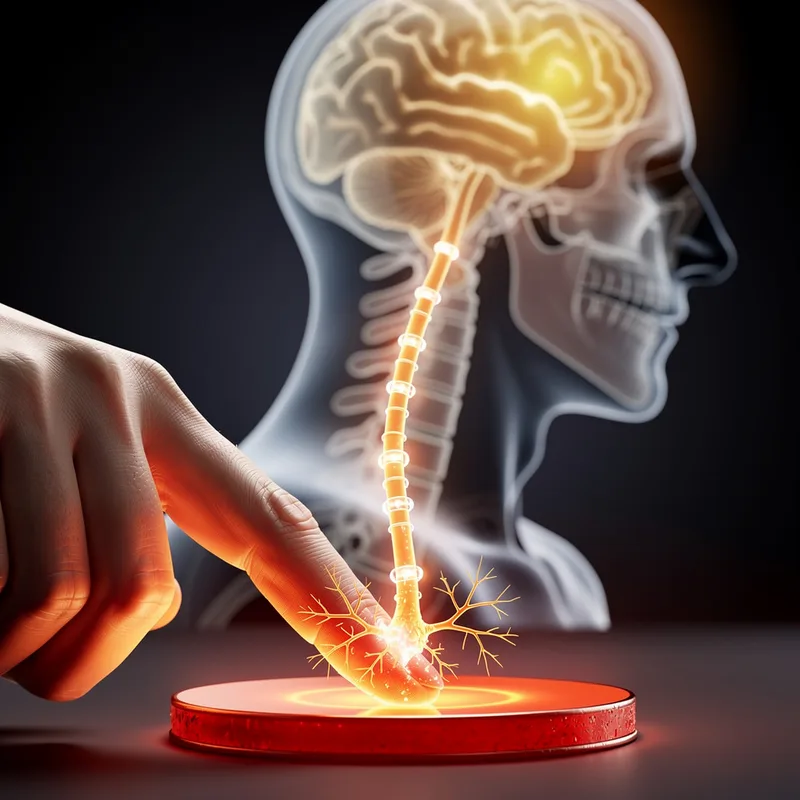
When you accidentally touch a hot surface, nociceptors in your skin send signals to your brain to warn you.
-
The role of nociceptors is crucial during injuries, as they help the body respond to painful stimuli.
-
Now primary nociceptors, it's a Greek term.
-
I'll talk about nociceptors, which is what I work on in my lab at Mass General.
-
OK, so salmon have nociceptors, they have spinal cords.
-
Did you know, that the tips of the fingers are filled with millions of nerve fibers ... called nociceptors?
-
For example, some nociceptors are attached to fibers with slightly more conductive fatty myelin than others.
-
These neuropeptides are found together in the cutaneous free nerve endings of unmyelinated nociceptor neurons, which generate the sensations of pain and itch.
Academic text (1999) -
Acute pain is a direct response from nociceptors that are activated by noxious stimuli.
Surface Forms
Morphology
nociceptor = noci + cept + or
This is a technical term built from classical elements meaning roughly 'pain/harm' + 'receive' + '-or', but the full meaning is not transparent to an average B1 learner.
Etymology
Nociceptor comes from the Latin nocere, meaning 'to hurt', and the part -ceptor, which is like the English word 'receive' and means 'to take in'. So a nociceptor is a 'receiver' of hurt, which is why it is a nerve cell that senses pain.