
nitrofurantoin
- noun
- /ˌnaɪtroʊfjʊəˈræntɔɪn/
- Specialized
- Trimethoprim and nitrofurantoin are not licensed for use in neonates but have been used extensively without problems, provided jaundice is absent.
Examples
-
Nevertheless, E. coli isolated from poultry from conventional rearing farms showed higher drug resistance rates for all antimicrobials, with the exception of amoxicillin/clavulanic acid and nitrofurantoin (Table 2).
Academic text (2008) -
Use of TMP-SMX, amoxicillin, ciprofloxacin, norfloxacin, or nitrofurantoin in the preceding 14 days. Outcome
Academic text (2015) -
Compared with amoxicillin, TMP-SMX was associated with increased risk for sudden death in patients treated with spironolactone (Table). Risk for sudden death was also associated with ciprofloxacin and nitrofurantoin but not norfloxacin (Table). # Conclusion #
Academic text (2015) -
Resistance to nitrofurantoin was lower than expected, given the documented illicit use of nitrofurans in Portugal by poultry producers in 2002-2003 (DGV, 2004).
Academic text (2008) -
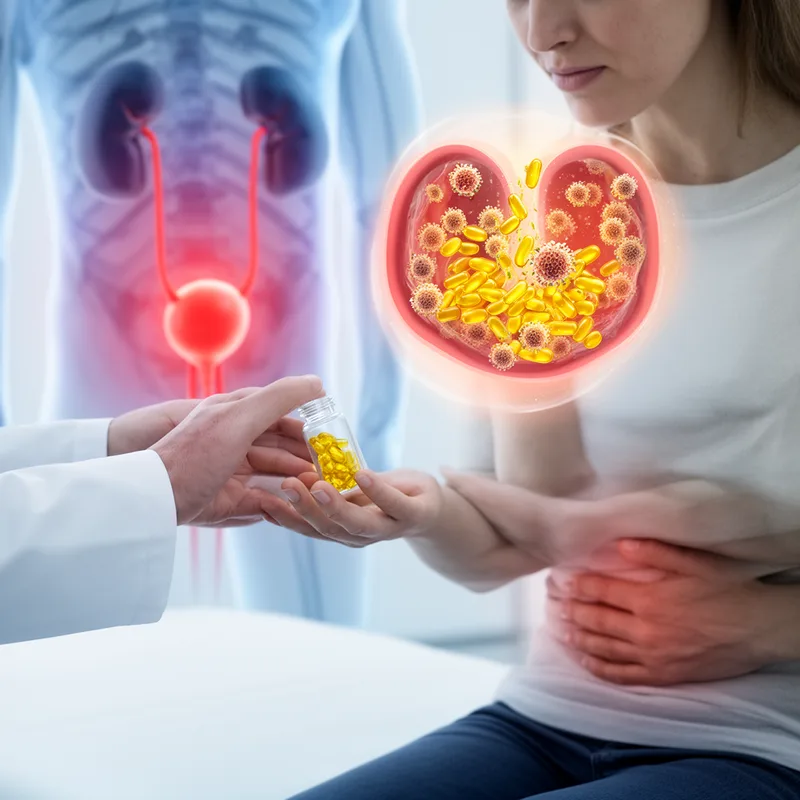
Nitrofurantoin is commonly prescribed to treat urinary tract infections due to its effectiveness against various bacteria.
-
Doctors often recommend nitrofurantoin as a safe option for treating bladder infections in both men and women.
-
My physician prescribed nitrofurantoin to help clear up the urinary tract infection that I had been suffering from.
Synonyms



 1
9.1
1
9.1
A medicine that treats urinary tract infections caused by bacteria

A medicine that kills bacteria or stops their growth
Surface Forms
Morphology
nitrofurantoin = furantoin (opaque) = nitro + furan + toin
Formed by adding the technical chemical combining form 'nitro-' to a drug-name base; this kind of specialized nomenclature is not transparently meaningful to general learners.
Etymology
The word nitrofurantoin comes from two chemical parts in the drug: nitro, which relates to 'nitrogen', and furan, which means 'a small ring' in its make-up. Those parts help the medicine fight bacteria, so nitrofurantoin is used to treat urinary tract infections.