
neurofibromatosis
 2
9.9

- noun
- /ˌnʊroʊfaɪbrəˈmoʊtəʊsɪs/
- Specialized
- An operation was planned in a 27-year-old male patient weighing 60 kg with the diagnosis of cervical neurofibromatosis.
- neurofibromatosis type
- neurofibromatosis type 1
- neurofibromatosis type 2
Examples
-
The tumors resulting from neurofibromatosis are typically benign, but they can lead to various complications.
-
In 25% to 70% of cases, malignant schwannoma is associated with neurofibromatosis.
Academic text (2003) -
Only one of these cases involved a patient with neurofibromatosis type 1.
Academic text (2003) -
Also, four patients had neurofibromatosis type 2.
Academic text (1995) -
The percentage appears to be higher in patients who have a family history of neurofibromatosis.
Academic text (2003) -
Felicity has neurofibromatosis, which has as a result, left her profoundly deaf and with low vision.
-
Survival is worse in patients with centrally located or large tumors and in patients with neurofibromatosis type 1.
Academic text (2006) -
Multiple neurofibromas are associated with von Recklinghausen's disease (neurofibromatosis type 2).
Academic text (2005) -
Neurofibromatosis is known to be complicated by malignant tumors, most of which are of soft-tissue origin.
Academic text (2003) -
We describe a rare complication of stereotactic radiotherapy for large acoustic neuromas in a patient with type 2 neurofibromatosis.
Academic text (2002)
Synonyms


 1
9.6
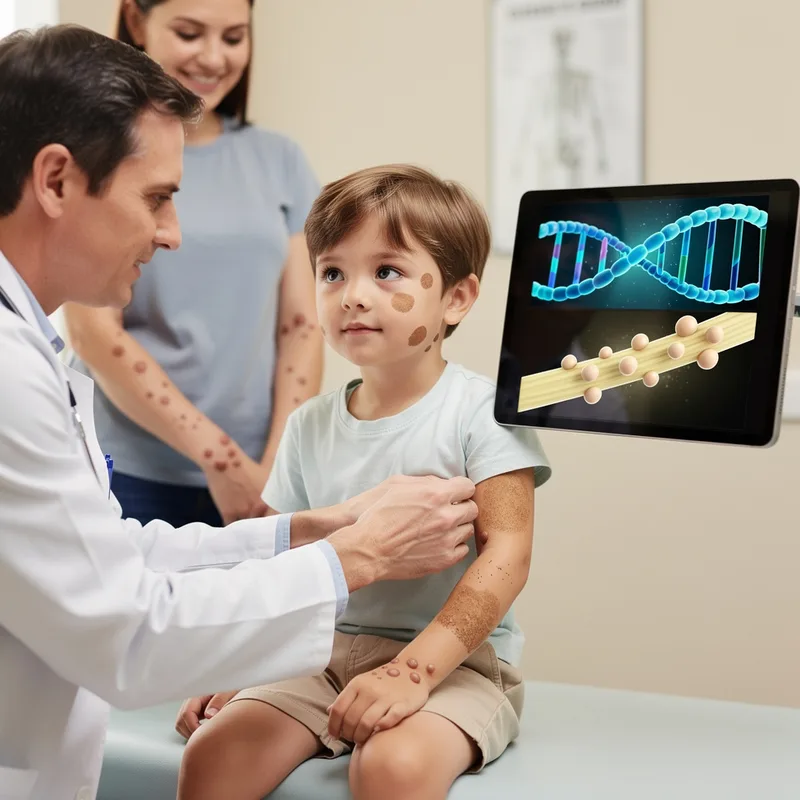
A condition passed from parent to child causing many small bumps, pale brown skin spots, and sometimes learning problems
Surface Forms
Morphology
neurofibromatosis = neurofibroma (opaque) = neuro + fibroma + osis
The term is formed with medical combining forms and the disease suffix '-osis', but the specialized meaning is not easily recoverable for an average learner.
Etymology
Neurofibromatosis breaks into three parts: neuro- meaning 'nerve', fibro- meaning 'fiber' or 'connective tissue', and -osis meaning 'a condition'. So, the name tells you what it is: a 'condition of fibrous growths on nerves', which is why people with the disorder often develop many benign tumors and skin changes.