
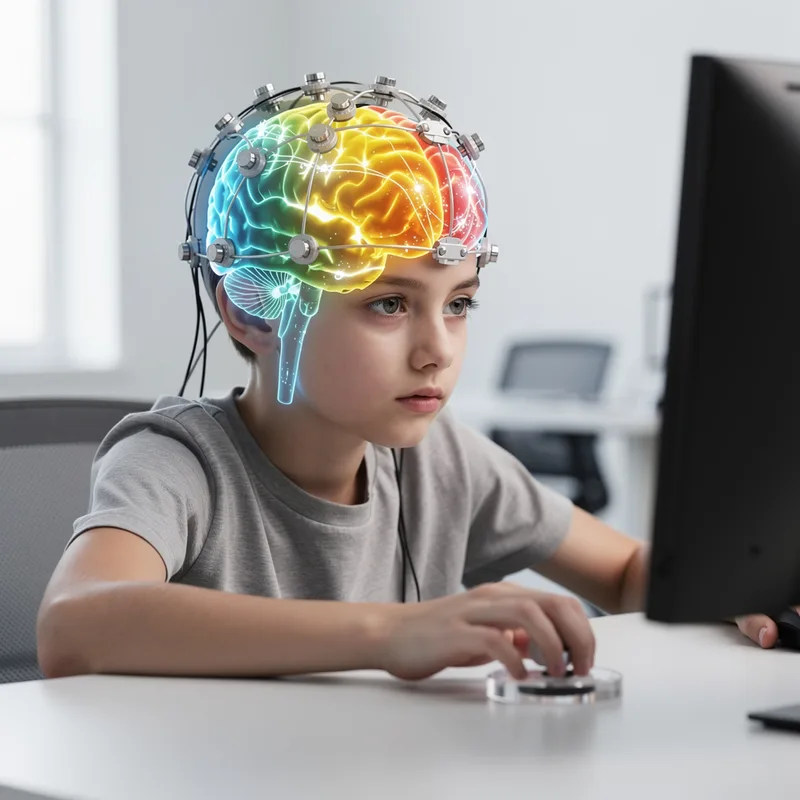
neurocognitive
 1
7.5
1
7.5

- adjective
- /ˌnjʊəroʊˈkɒɡnɪtɪv/
- Specialized
- The study focused on how neurocognitive development influences children's learning abilities.
- neurocognitive functioning
- neurocognitive development
- neurocognitive deficits
Loading YouTube…
Watch on YouTubeAnd your your research includes neurocognitive models and multimodal brain imaging.
- And your your research includes neurocognitive models and multimodal brain imaging.
Examples
-
Of the 38 infected neonates, 33 were compared to a control group of 135 uninfected children and evaluated for their neurocognitive functioning.
Academic text (2016) -
Certain neurocognitive disorders can hinder an individual's ability to process information effectively.
-
And we looked for a host of terms that might potentially represent neurocognitive symptoms.
-
And then there are potential neurocognitive and behavioral changes that need to be studied as well.
-
The fragmentation of sleep has considerable neurocognitive consequences.
Academic text (2008) -
Congenital infection can severely affect neurocognitive functioning in early childhood.
Academic text (2016) -
New findings indicate that long-term abstinence from alcohol can resolve many, but not all, neurocognitive deficits.
Blog text (5) -
Long-term abstinence may resolve many of the neurocognitive deficits associated with alcoholism
Blog text (5) -
Results indicate that long-term abstinent alcoholics can recover many of their neurocognitive deficits, except for spatial-processing abilities.
Blog text (5) -
Researchers are exploring the neurocognitive effects of aging on memory and attention.
Synonyms
 1
8.2
1
8.2
About how the brain affects thoughts and behavior
How Cognitive
- Specialized
1
7.5

- Specialized
134
5.4
- US
165
3.9
525
2.1
Surface Forms
Morphology
neurocognitive = cognitive (transparent) = neuro + cognit + ive
The word is transparently formed by adding the combining form neuro- to cognitive, with a directly compositional meaning.
Etymology
Neurocognitive combines neuro- meaning 'nerve' or 'brain' and cognitive from a root meaning 'know', like in 'recognize'. So neurocognitive describes the brain's work of 'thinking', 'remembering', and handling information.