
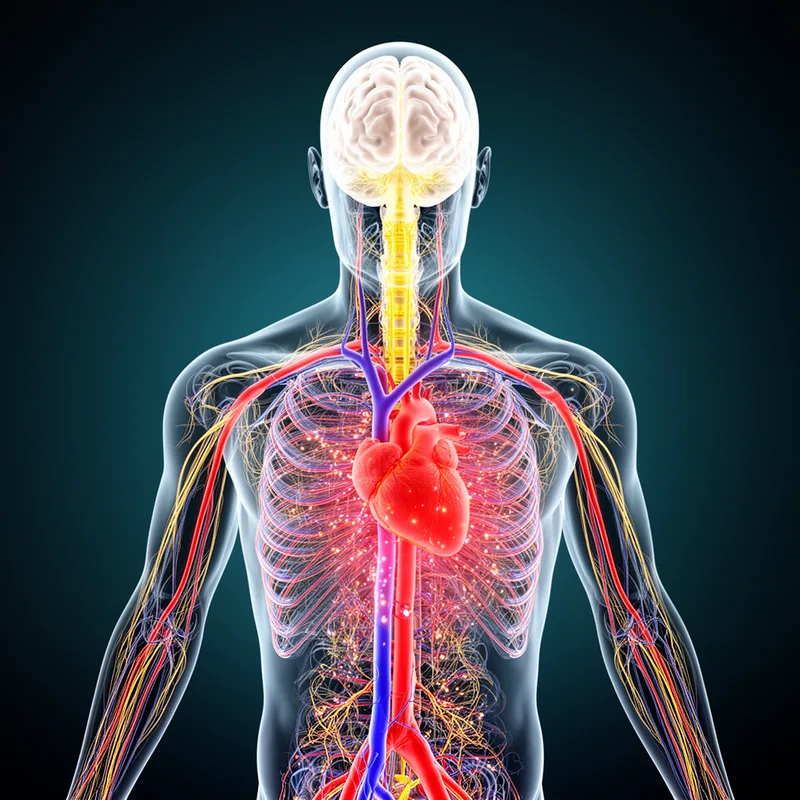
neurocirculatory
- adjective
- /ˌnʊroʊˈsɜrkjʊˌleɪtəri/
- Specialized
- Doctors discovered that the patient was suffering from a neurocirculatory condition that affected both his heart and nervous system.
Examples
-
Patients experiencing neurocirculatory issues often report symptoms like dizziness and fatigue after physical exertion.
-
The study focused on neurocirculatory disorders, highlighting how stress impacts blood flow and nerve function.
-
The phenomenon described by Da Costa in 1871, and by Oppenheimer and Lewis following the First World War, as "irritable heart," "effort syndrome," and "neurocirculatory asthenia" surfaced again during the Second World War.
Academic text (1990) -
Following World War One, Sir Thomas Lewis (1919) described a group of soldiers with a similar cluster of symptoms; he called this the "soldier's heart or the effort syndrome." Oppenheimer (1918) referred to similar psychoneurotic and cardiac manifestations in soldiers of the First World War as "neurocirculatory asthenia."
Academic text (1990)
Synonyms
 1
4.8

Relating to both the nerves and blood vessels
Surface Forms
Morphology
neurocirculatory = circulatory (transparent) = neuro + circul + atory
Adding neuro- to circulatory gives a straightforward technical meaning: relating to both nerves and blood circulation.
Etymology
The word neurocirculatory joins neuro- meaning 'nerve' and circulatory which comes from circle, meaning 'to move in a circle'. So, neurocirculatory refers to things that involve both the nerves and the blood flow that moves around the body.