
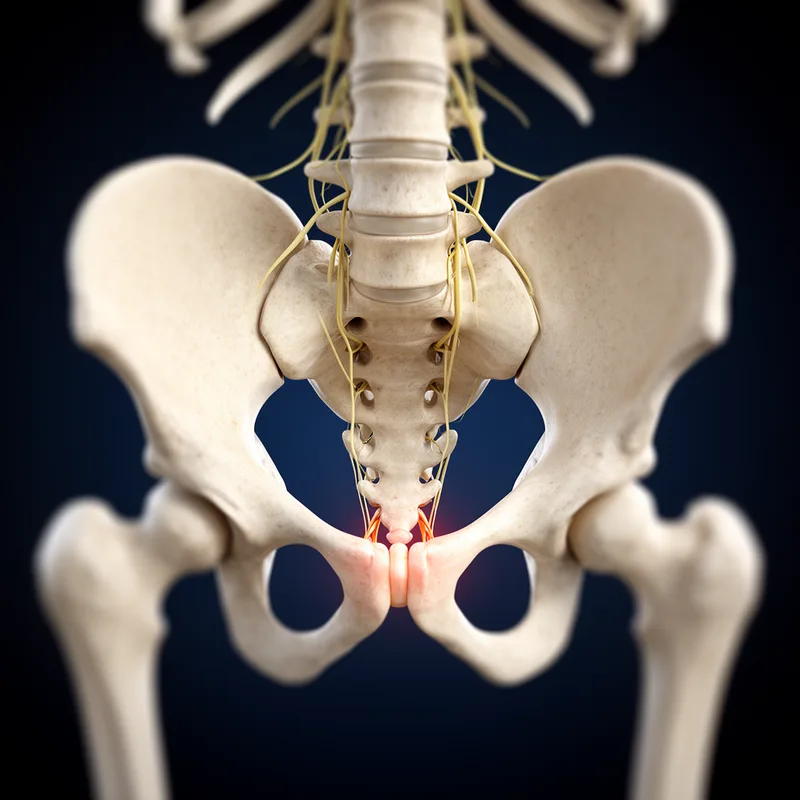
nervus coccygeus
- noun
- /ˈnɜrvəs kɒkˈsɪdʒəs/
- Specialized
- Injury to the nervus coccygeus is rare but can result in coccygeal pain.
Examples
-
In some individuals, the nervus coccygeus may be absent or fused with adjacent nerves.
-
The nervus coccygeus plays a crucial role in pelvic function.
-
During the anatomy lecture, the professor highlighted the importance of the nervus coccygeus in the spinal cord.
-
Many patients experience pain related to the nervus coccygeus.
-
During the anatomy lecture, the professor highlighted the importance of the nervus coccygeus in the spinal cord.
-
In some individuals, the nervus coccygeus may be absent or fused with adjacent nerves.
-
The nervus coccygeus is responsible for sensation in the area around the coccyx.
Synonyms

A nerve near the tailbone at the base of the spine
Surface Forms
Morphology
nervus + coccygeus
The term is compositionally built from Latin parts: 'nervus' = nerve and 'coccygeus' = relating to the coccyx (tailbone), so a learner who knows both constituents can infer 'nerve of the coccyx' or the low spinal nerve. Anatomical Latin names follow regular, cross-linguistic compositional patterns, making the meaning directly derivable from the parts.
Etymology
Nervus coccygeus comes from old words: nervus means 'nerve' and coccygeus comes from a word for a small bird because the tailbone was thought to look like a bird's beak. That's why the name points to the small nerves at the very bottom of the spine, near the tailbone.

