
nervism
- noun
- /ˈnɜrvɪzəm/
- Archaic
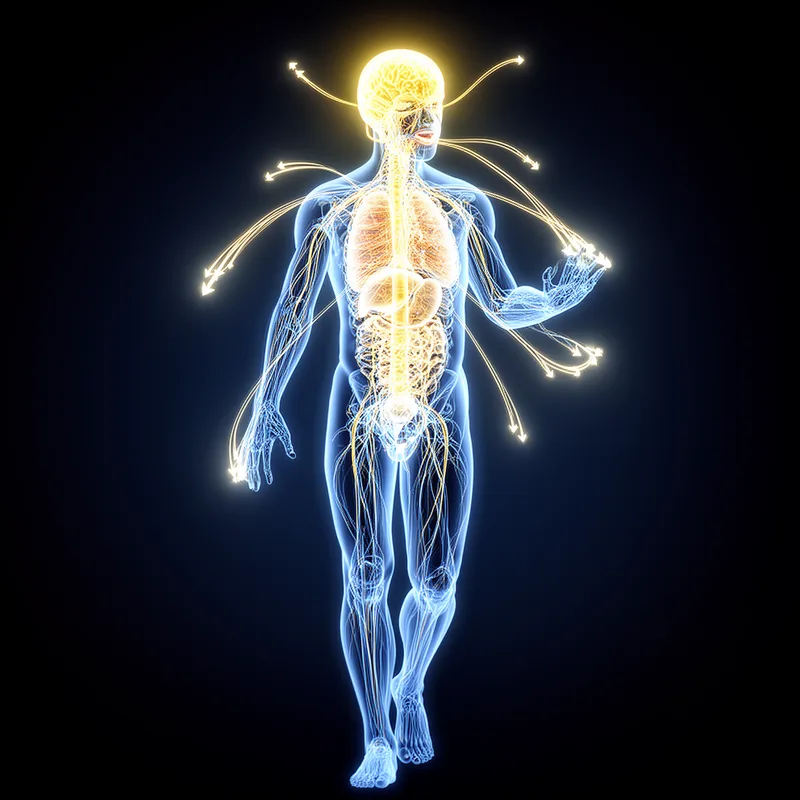
- Nervism explains how the nervous system influences behavior.
Examples
-
Pavlov's experiments with conditioned reflexes helped establish nervism as a central principle in physiology.
-
The doctrine of nervism emphasizes the regulatory role of the nervous system in all bodily functions.
-
Modern neuroscience owes much to the early ideas of nervism championed by Russian scientists.
-
The nervism theory was developed by Ivan Pavlov.
-
Pavlov's groundbreaking research solidified nervism as a key concept in understanding the nervous system's control over behavior.
-
The doctrine of nervism asserts that all physiological processes are managed by the nervous system.
-
Modern psychology incorporates nervism to explain the links between neural activity and behavioral responses.
Surface Forms
Morphology
Etymology
Nervism comes from the Latin root nervus meaning 'nerve' or 'sinew' and the ending -ism meaning 'a theory or belief', and it shares the same root as the English words nerve and nervous. So, nervism is the idea that the nervous system controls behavior and all bodily processes.

