
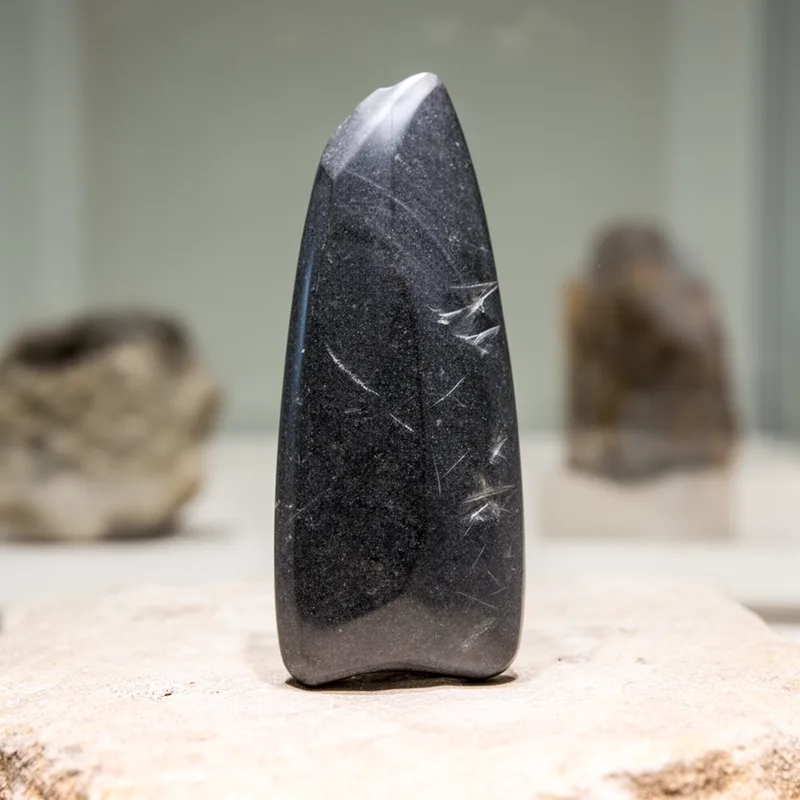
neolith
- noun
- /ˈniːəˌlɪθ/
- Specialized
- The neolith displayed intricate craftsmanship and showed evidence of regular use.
Examples
-
Many museums feature neoliths to illustrate advances in prehistoric technology.
-
The archaeologist discovered a rare neolith in the cave.
-
Archaeologists discovered a neolith while excavating the ancient settlement.
-
Many neoliths were found at the ancient site.
-
Archaeologists discovered a neolith while excavating the ancient settlement.
-
The neolith displayed intricate craftsmanship and showed evidence of regular use.
-
Many museums feature neoliths to illustrate advances in prehistoric technology.
Surface Forms
Morphology
neolith = neo + lith
Formally 'neo-' (new) + 'lith' (stone) is clear, but 'lith' is a bound combining form (not a standalone English word), so learners may not infer 'stone' without prior exposure.
Etymology
Neolith comes from Greek parts neo- 'new' and -lith 'stone', so it literally means 'new stone'. That's why a neolith is a stone tool from the Neolithic or 'New Stone Age' — a later, often polished and specially shaped stone tool rather than a simple, rough rock.

