
neo-Gothic architecture
- noun
- /ˌniːoʊˈɡɒθɪk ˌɑːrkɪˈtɛkʧər/
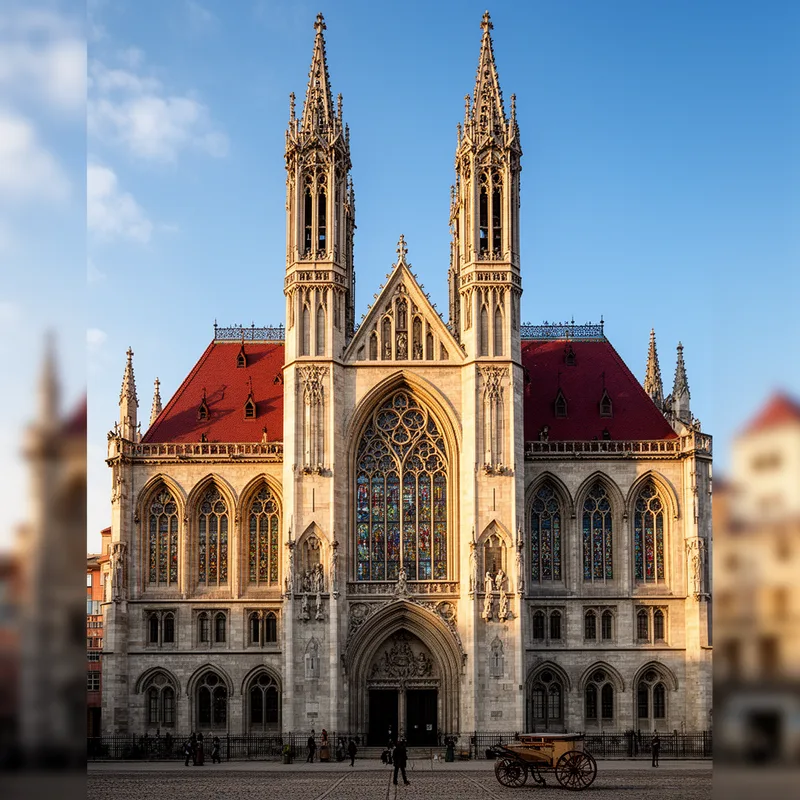
- The cathedral was built in the neo-Gothic architecture style, featuring pointed arches and elaborate stained-glass windows.
Examples
-
Many universities in the United States adopted neo-Gothic architecture to convey a sense of tradition and grandeur.
-
The city hall's neo-Gothic architecture stands out among the surrounding modern buildings.
-
The city is known for its stunning neo-Gothic architecture.
-
Many buildings in London feature neo-Gothic architecture.
-
Many universities in the United States adopted neo-Gothic architecture to convey a sense of tradition and grandeur.
-
The cathedral was built in the neo-Gothic architecture style, featuring pointed arches and elaborate stained-glass windows.
-
The city hall's neo-Gothic architecture stands out among the surrounding modern buildings.
Synonyms


 1
8.1
1
8.1
A style of building that copies medieval Gothic churches, popular in the 18th and 19th centuries

A style of building design that copies medieval Gothic features like pointed arches and decorative stonework
Surface Forms
Morphology
The meaning is transparently compositional: 'neo-Gothic' specifies a revival/Gothic-inspired style and 'architecture' denotes building design, so the phrase simply means architecture in the neo‑Gothic style. The 'neo-' prefix and adjective + noun pattern are cross-linguistically common, so a B1 learner who knows both constituents should be able to derive the meaning.
Etymology
Neo-Gothic architecture comes from the words neo (meaning 'new') and Gothic (the medieval style of tall churches). In the 1800s builders copied pointed arches, tall spires and carved stone from old churches but used new building methods, so the phrase came to mean a 'new' version of Gothic design used to make buildings look grand and old-fashioned.