

nemertean


 1
9.9
1
9.9
- noun
- /nəˈmɜrtiən/
- Specialized
- A nemertean is known for its ability to stretch its long, threadlike body in the water.
Examples
-
In tidal pools, we found a colorful nemertean that was coiling around a rock.
-
Nemerteans are gregarious at the supper table as well.
Academic text (1992) -
A wad of nemerteans, the size of a basketball, congregated in a prolonged communal copulation.
Academic text (1992) -
Here, nemerteans—yard-long, wormlike organisms—lay on the surface of the mud.
Academic text (1992) -
Sportfishermen in the bay have used sandworms, bloodworms, nemertean tapeworms, shrimp, and mummichogs for bait.
Academic text (1990) -
The marine biologist studied the behavior of the nemertean in its natural habitat.
Synonyms
 299
1.0
299
1.0
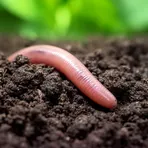
A small soft animal without legs that lives in soil or water

A long soft sea animal that can stretch and reach prey with a thin mouth tube

A soft sea animal like a thin worm that stretches a long head to catch food
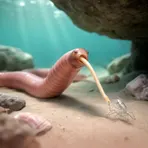
A soft sea worm with a long tube that can stretch to catch food
Surface Forms
Morphology
nemertean = Nemertea (semi-transparent) = nemertea + an
Formally 'Nemertea' + the suffix '-an' denotes a member of that taxon, but the base is specialized scientific vocabulary not known to most B1 learners.
Etymology
The word nemertean comes from the Greek sea nymph Nemertes, so the name links the animal to the sea. That's why nemertean means a sea worm famous for its very long, thread-like 'proboscis' used to catch food.