

negro peach
- noun
- Archaic
- The negro peach is cultivated in several parts of tropical Africa for its ornamental value.
Examples
-
Locals often use the fruit of the negro peach in traditional remedies.
-
I found a negro peach at the local market.
-
Researchers studied the chemical properties of extracts from the negro peach shrub.
-
The negro peach is known for its unique flavor.
-
Farmers grow the negro peach for its nutritious fruit, which can be eaten or used in juices.
-
In Africa, the negro peach shrub provides shade and is often found in gardens due to its broad leaves.
-
The negro peach is often harvested during the late summer months when its fruit is ripe and ready to eat.
Synonyms

A tropical African shrub with round brownish-red bumpy fruit eaten and used as medicine
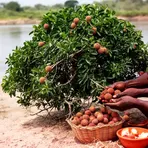
A strong spreading African shrub that has round brown red bumpy fruit used in traditional medicine
Surface Forms
Morphology
negro + peach
The noun-noun combination is compositional: 'peach' names the fruit/plant and 'negro' functions as a descriptive modifier (likely 'black' or dark), so a learner knowing both words can infer this is a variety of peach or a peach-like shrub with dark-coloured fruit. This adjective + noun pattern is a common, cross-linguistic way to name plant/fruit varieties, making the meaning predictable for a B1 learner.
Etymology
Negro peach The name may come from people who used negro, a Spanish word for 'black' or 'dark', for the fruit's deep skin and peach because the round fruit looks a little like a peach. So the name points to the plant's dark, peach-like fruit and explains why the tropical shrub is called that.

