

necromancer
 8
9.9
8
9.9

- noun
- /ˈnɛkrəˌmænsər/
- Literature
- The necromancer raised the spirits to reveal secrets from the past.
- a young necromancer
- the black necromancer
- the necromancer said
Loading YouTube…
Watch on YouTubeAnd she also says that her tutors, the necromancers, they were alive before the Asteri.
- And she also says that her tutors, the necromancers, they were alive before the Asteri.
- Like I said, you're following, I think the short way of describing it was lesbian necromancers.
Examples
-
And yet, you, Your Grace, became a necromancer," Edmund observed, breaking the uncomfortable silence.
Fiction book (1991) -
Do you know what the church does to necromancers?
-
We saw that much for ourselves," said the other necromancer, a male.
Fiction book (1991) -
When the prince was gone, the necromancer raised his head.
Fiction book (1991) -
From out of the darkness... a Necromancer... has come.
-
We need guile to draw out the necromancer.
-
A powerful necromancer himself, he had many long years left to stave off that fate.
Fiction book (1991) -
The enemy necromancer waited patiently at the head of his own army.
Fiction book (1991) -
Djarian is probably the preeminent necromancer in the world.
Fiction book (1993) -
I am a necromancer.
Synonyms
 260
4.6
260
4.6
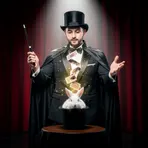
A person who uses magic to do powerful or strange things
 245
3.6
245
3.6
A person who does tricks that look like magic or who people think has real powers
 108
8.6
108
8.6
A man who uses magic and is thought to work with evil spirits
 107
7.9
107
7.9
A person who uses magic to make things happen
 31
8.9
31
8.9
A person who says they can talk to the spirits of dead people
 5
9.9
5
9.9
A person who studies or practices hidden spiritual powers like talking to spirits
 2
8.7
2
8.7
A person who uses magic to change people or things
 1
9.9
1
9.9
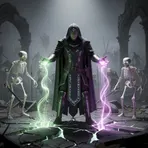
A game character who summons and controls dead creatures
 1
9.9
1
9.9
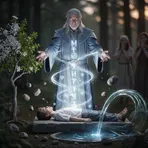
A person who does magic to make impossible things happen
 1
8.4
1
8.4
A person who uses magic to call spirits or creatures to help
 1
8.6
1
8.6
A person who claims to have magic powers to help or harm people
 1
9.0
1
9.0
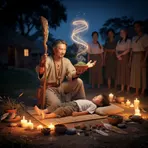
A person who uses magic and rituals that people think have real powers
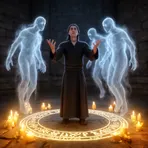
A person who tries to call ghosts or other spirits

A person who does magic or seems to cause miracles
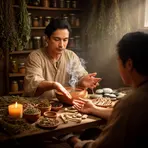
A man who uses traditional magic to heal people or tell the future
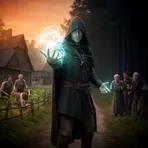
A person who uses magic in old stories
Surface Forms
Morphology
necromancer = necromancy (opaque) = necromancy + er
The agentive suffix -er is clear, but the base 'necromancy' is a learned classical term whose meaning is not recoverable for most B1 learners from its parts.
Etymology
The word necromancer comes from Greek parts: necro- meaning 'dead' and manteia meaning 'divination' or 'telling the future'. So a necromancer is someone who tries to learn secrets by speaking with or raising the dead.